Showing posts with label Alabama. Show all posts

Tuesday, May 21, 2019

The “Red Lady” Ghost


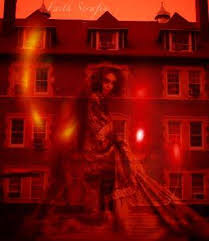
Red Lady Ghost

She is seen floating through the halls in her red robe, her wrists slit . . .

Huntingdon College in Montgomery, Alabama, has laid claim to this tragic female ghost for generations. Her spirit is seen on the fourth floor of Pratt Hall, a former dormitory at this college.

I first read this legend in Kathryn Tucker Windham’s collection of ghost stories, entitled Thirteen Alabama Ghosts and Jeffery.

Huntingdon College
A reluctant young female student, named Martha, arrived at Huntingdon College in 1910, wearing a red dress and carrying a red bedspread, and red rug.

Tuskegee Female College
She was born in New York to wealthy parents and had no desire to attend a school in the South, but her mother had attended the college when it was in Tuskegee, and her father left specific instructions in his will.

So Martha feeling she had no choice, complied.

Martha was painfully shy, and when other student’s approached her to query why her door room was decorated with draperies and figurines all in red, she hesitated and then was quiet.

They mistook her reaction for disdain.

After this, she had trouble making friends because she now had a reputation for being “stuck up.”

She actually was just having a great deal of trouble adjusting to the new environment.

One roommate after another tried to break Martha’s reserve but failed, uncomfortable, they would request to move out of the “red” dorm room.

This sad young lady, missing home, and with no friends to confide in, became depressed. She began to roam the halls of the dormitory at night. She was seen opening random doors, staring as if in a trance.

The popular resident hall president, taking pity on Martha moved in but her attempts to befriend the reclusive coed failed. Martha returned to her room, one afternoon, to discover the president moving out.

Bitter at this point, Martha told this young lady she would regret her decision.

The next day she did not attend any of her classes. The president was sent to check on her.

As she approached the room, she saw strange red flashes of light coming from the door’s transom. She screamed as she opened the door.

Martha was lying dead on her red rug. She had slashed her wrists taking her own life.
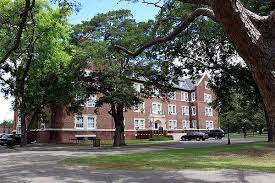
Pratt Hall today.
Ever since students have seen these red flashes coming from this room on the anniversary of Martha’s death.

Her ghost, wearing a red robe, is often seen on Pratt Hall’s fourth floor, floating down the hall. She is also observed walking through walls and closed doors.

A red glow is also spotted coming from the room that was once hers.

Pratt Hall is no longer used as a dorm. Today it is Huntingdon colleges’ Department of Education and Psychology—but Martha's ghost is still seen. 

Here are two other posts that highlight stories from Windham's book. 

13 Alabama Ghosts and Jeffrey 

Bill Sketoe's Hole

Thursday, March 7, 2019

Traces of Ghosts Who Rode the Rails


When the Great Depression hit America in the 1930s, more than a million men and women were forced to seek food and work—thousands of miles from their homes.

Riding the rails.
The only way they could afford this travel was by hopping a freight train, illegally. In just one year, it is estimated that 6,500 hoboes, as they were called, were killed in accidents or by railroad “bulls.”

These bulls were the brutal guards hired by the railroad companies to make sure no one but paying customers rode on their trains.

Many people who became famous later rode the rails. Including the Novelist Louis L’Amour, TV host Art Linkletter, Oil billionaire H. L. Hunt, the Journalist Eric Sevareid and Supreme Court Justice William O. Douglas.

Hopping a freight
Because the bulls were always on the lookout, hoboes were forced to hide near the tracks. As the trains picked up speed and past them, they had to run, then grab hold and jump in the moving boxcars.

Unfortunately, sometimes they missed, which resulted in lost limbs or lost lives.

When the hoboes reached their destinations, they had to jump off the moving trains before the bulls could arrest them. If caught they were often beaten, some so severely they died.

In the small town of Attalla, Alabama, several rail lines met. During the Great Depression, thousands of hoboes traveled through this area.

Mountains around Gadsden and Attalla
Riding the rails was dangerous enough but south of the Attalla rail yards the area was even more treacherous. For this community is surrounded by mountains and down the tracks are steep grades—which meant some hoboes plummeted to their deaths.

Today, passenger trains no longer travel through Attalla, and the freight trains are disappearing as well but the ghosts they brought still linger. For decades strange sightings on the south section of the tracks have been shared.

Countless ghostly figures in worn clothing, carrying knapsacks are seen strolling along the tracks.

Even more dramatic is that strange lights are seen in the surrounding mountains when these figures appear.

Two hoboes walking the tracks after being released by "bull."

Wednesday, May 4, 2016

Sloss Furnaces: A Living Hell


For years, Birmingham, Alabama, police have received calls from concerned citizens that they witnessed unexplained activity at Sloss Furnaces Historical Landmark.

Sloss Furnaces opened in 1882 and operated for 89 years, producing high-quality pig iron. The steel that came from these furnaces was then used to built railroads, skyscrapers, and bridges during America’s industrial revolution.

Milton iron flowing from a Sloss Furnace.
The human cost to produce this steel was high. The work conditions at Sloss were unbearable and dangerous. The workers were never given breaks or holidays.

“During the stifling summer months temperatures throughout the plant would reach more than 120 degrees. Lack of sleep, the heat and low visibility made working the furnace literally a “living hell” and only the poorest workers—immigrants—desperate for employment, would work it.”

One foreman that worked at Sloss made these horrendous conditions even worse. James “Slag” Wormwood ran the graveyard shift.

Slag to impress his bosses drove his men hard. He often demanded they take unnecessary and dangerous risks. The reason for this was to speed up production.

Under Wormwood’s management, 47 men lost their lives. This was ten times the fatality rate than any other shift. On top of this, countless men were injured in accidents, which left them unable to work.

In one accident alone in 1888, one explosion left six men burned and blind.

Big Alice
In October of 1906, Slag Wormwood fell from the top of the highest furnace—known as Big Alice—into a giant pool of smelting ore. His body dissolved within seconds. 

According to one legend, this wasn’t an accident. Workers may have assisted his fall.

Ever since there have been sightings of Slag’s spirit at Sloss Furnaces. His ghost is seen as an evil tormentor.

Past employees of the plant have shared numerous stories. Most involve them being shoved from behind by unseen hands. A typical report is they heard a voice scream, “get back to work.”


The Sloss Furnaces former night watchman, Samuel Blumenthal, tells one story that happened to him in 1971. This was the night before the plant shut down production.

He states he found himself. “face to face” with the “most frightening thing he had ever seen.” He described this figure as “evil.” He stated it was “half-man/half-demon.”

This figure tried to push him up the stairs he was standing on. When Blumenthal refused, it proceeded to beat him with its fists.

Later, when a doctor examined him, he found Blumenthal was covered in “intense burns.”

This haunting continues today, as evidenced by all the reports the police receive from concerned citizens.

The haunted tunnel at Sloss.
Slag Wormwood’s ghost is not the only entity seen at Sloss, other spirits are believed to be those who lost their lives at the plant. They are most often seen and heard near where they died.

Sloss Furnaces have been preserved for public use. The site has a museum and hosts a nationally recognized metal arts program. Tours are given of what remains of the plant. At Halloween, a haunted attraction called Sloss Fright Furnace is held.

Monday, April 25, 2016

Evelyn Carter and Gaineswood

Gaineswood in 1860.
Gaineswood a southern plantation was built in southwestern Alabama, in Demopolis on the eve of the Civil War.

General Nathan Byron Whitfield designed his mansion to reflect the Greek revival style and had highly skilled artisan slaves build it. Today it is considered Alabama’s finest neoclassical home. It reflects three ancient Greek architectural orders: Doric, Ionic and Corinthian.

General Whitfield
It was used as a private residence until the late 1960s. The house is beautifully preserved and still has beautiful Chippendale furniture throughout.

It is on the National Register of Historic Places and is listed as one of 150 mansions in the U.S. that are must-visits. Today it is run as a house museum.

Tragically, soon after the mansion was completed, General Whitfield’s wife died. He was left with small children to rear. He hired a young gently bred lady, a Miss Carter to be his housekeeper, and a companion for the children.

Miss Carter’s nearest relatives were in Virginia, and her father was in Europe serving as consul to Greece. Despite her duties keeping her busy, the General noted Ms. Carter was lonely. He gave her permission to invite her sister Evelyn to Gaineswood for the winter.

Evelyn was a merry addition to the home. She loved to play the piano. The General also a musician often accompanied her. He enjoyed tunes from Scotland and would play duets with Evelyn on his bagpipes.

Despite it being one of the coldest winters on record, Evelyn’s presence brought happiness to everyone.

Tragically, Evelyn became ill. The General called in the best doctors, but after several weeks Evelyn died. Depending upon which account one reads, Evelyn died of a severe attack of malaria or pneumonia.

In a more dramatic version, it is stated she died of a broken heart.

Lantern domes are
above several rooms to
provide extra light.
A handsome French count—an exile from the Napoleonic Wars—was visiting Demopolis. He became attached to Evelyn. He bought her an engagement ring, but the couple quarreled. He snatched the ring from Evelyn’s hand and threw it into the bushes.

He then left and never returned. Grief-stricken, Evelyn succumb to illness.

Her last wish was to be returned to Virginia for burial. It being winter, the roads were covered in ice and snow, it would also take Evelyn’s father weeks to return from Greece for the funeral.

So a decision was made to place Evelyn’s body in an airtight pine box sealed with rosin. It was then placed below the stairs in the cellar. When spring arrived, it would be taken to Virginia.

The residents of Gaineswood came to believe because of this decision, Evelyn’s spirit could not rest in peace. They decided she did not like being kept in a cold, dark cellar.

Soon after being placed in the cellar, people in the household began to hear footsteps coming up the cellar stairs. They would listen to someone tiptoe into the drawing-room where the large piano stood.


Faint sounds of music would float throughout the mansion. Most of these tunes were Scottish ballads.

On several occasions, when braver souls would venture down into the cellar, these sounds would stop. But once they returned upstairs, the musical sounds would begin again.

These footsteps and music were so persistent they would wake the entire household. So when spring arrived, everyone was happy. They believed their sleep would no longer be interrupted. But they were wrong.

Even though the activity was not regular, Evelyn’s ghost continued to haunt Gaineswood. Apparently, she was still protesting; she was kept in the cellar for several months.

Even in more recent years, when Gaineswood was still a private residence, visitors would insist their dreams were interrupted by the sounds of soft footsteps on the cellar stairs—followed by the melodious sounds of songs long forgotten.

Sunday, January 18, 2015

Bill Sketoe’s Hole

This ghost story takes place in the Wiregrass area of Alabama near the town of Newton.  It has endured for 150 years because many believe it is true.


No one has ever seen the ghost of William “Bill” Sketoe but the locals are firmly convinced he haunts the area where he was hanged.

Bill Sketoe was a Methodist minister whose family was originally from Spain. He grew up in the town of Newton.

In 1864 he was fighting in his 3rd year for the Confederacy when he received word his wife Sarah, who was home taking care of their eight children, had taken ill.

He hired a “substitute” to take his place at the front so he could return home and tend to his wife. After he returned, it is said Sarah significantly improved.

As Sketoe’s visit turned from weeks into months it is said the Captain of the Dale County Home Guard -- a man by the name of Joseph Breare became convinced Sketoe was a deserter.

He and five of his men ambushed Sketoe on December 3, 1864, in an isolated area outside Newton near the old Choctawhatchee River bridge. 


What is left of the original wooden
bridge can be seen in the center front of this photo.
Click to enlarge.
They beat him up--made him crawl through the sand-- and then placed him in a buggy with a noose around his neck that was attached to the limb of a Post Oak tree.

Breare asked if he had any last words, and Sketoe asked if he could pray. But when he began to pray for the men in front of him, the captain became infuriated and whipped the buggy’s horse.

What these militiamen did not take into account was Sketoe was a tall, large man. The branch of the tree bent under his weight, and he was able to touch the ground with his toes.

George Echols, one of Breare’s men home because he was wounded, took his crutch, and dug a hole beneath Sketoe’s feet. Sketoe then strangled, and the deed was done.

Click to enlarge


After the hanging the hole that Echol’s dug remained. It was dug out of the soft sand near the riverbank, but it didn’t fill in.

It kept its original dimensions--30 inches wide and 8 inches deep. People felt a simple gust of wind should have filled it in, but the hole remained.


For the next 125 years, people tried to fill this hole in. Dirt, trash, and sand were placed in it, but when people returned, sometimes within the hour, the hole was empty.
In 1979 a new highway
bridge was built over the spot
where the hanging took place. 


Two men while a new highway bridge was being built even camped over the spot. They filled it with dirt, one also placed his bedroll over it only to find the next morning the hole was empty.

It always kept its original dimensions--30 inches wide, 8 inches deep.

So who or what was keeping this hole cleared out? The locals immediately came to believe it was the ghost of Bill Sketoe. They felt he haunted the area where he died because he was hanged unjustly.

For years, people came to see this hole, and paranormal groups investigated the area. The citizens of Newton erected a monument to Bill Sketoe by the hole.

Local historians reported that the 6 men of the Home Guard responsible for the hanging of Sketoe all met mysterious deaths.

Captain Breare while riding his horse, on a clear day, struck the limb of a Post Oak tree--the same kind that Sketoe was hanged from--and fell off his horse and died.

Another man was struck by lightning and died. George Echols who had dug the hole with his crutch died in the swamp from an unknown cause.

Another man while riding his mule was thrown off and died. Witnesses to this event reported the mule ran off as if terrified by something. The last two men also died of mysterious causes.

People began to believe Sketoe’s ghost played a hand in these deaths.

Most of the legend shared above was first published in Kathryn Tucker Windham's book, 13 Alabama Ghosts and Jeffrey. I share another story from her book here.

The legend of why Bill Sketoe was hanged has several gaping holes. 

Historian David Williams in his book entitled, Rich Man’s War: Castle, Class, and Confederate Defeat in the Lower Chattahoochee Valley presents another reason Sketoe was hanged.

First, there is no record that William Sketoe ever served in any Confederate or state military unit.

The legend's claim that he arranged a substitute to take his place at the front is highly unlikely because the Confederates repealed the Substitution Laws in early 1864.

Williams’s book indicates the reason for Sketoe’s hanging is more complicated.

During the Civil War Dale County was a wild place. The surrounding forests harbored numerous deserters and Unionists. They frequently emerged to terrorize the locals.

The residents in the area formed Home Guards to defend themselves.

Newton Home Guard
Joseph Breare, a Newton lawyer,  had served in the Alabama infantry and was captured at Gettysburg. He later formed the Newton Home Guard known locally as the Buttermilk Rangers. 

He and his men resolved to hunt down and punish all deserters.

Breare became convinced that Sketoe was helping John Ward, the leader of a local band of deserters and pro-Union guerillas.

Even though Sketoe was never charged or tried and there was no hard evidence of his
Sketoe's grave.
connection with Ward, Breare hanged him anyway.

It seems Sketoe’s life was still taken unjustly. So the reason for the haunting stands firm.

In 1990, flooding covered the area where Sketoe was hanged with tons of rocks. The hole is no longer visible.

Tuesday, December 3, 2013

Newport Ghosts: Anatomy of a Ghost Legend


Newport, Alabama is just across the Black Warrior River from downtown Tuscaloosa. A very popular ghost story was told in in this area in the mid 1980s. The catalyst for this story was residents began to see two ghostly figures, on foggy nights as they drove around a corner on Highway 171.

So many people witnessed this phenomenon that cars literally lined up down each side of this highway in order to see these large white figures that looked like two human heads. 

Before this unusual sight was first reported a local resident had two ten-foot tall white pillars on brick bases built on either side of the entrance to his driveway. Atop these two pillars were large white balls. 

So what people were seeing was just an optical illusion.

Like most good legends these two Newport Ghosts needed a good backstory so several were created to make these sightings even more exciting.

One story said these two floating figures were actually the ghosts of two war widows. It is stated their husbands died in the Civil War and that these two women waited impatiently for their husband’s bodies to be returned to them.

It seems these two ghosts mistook modern car headlights for lanterns on a wagon--which would carry their husband’s remains home. Hence they were seen floating near cars looking for this wagon.

Another story involves two Southern sisters. They both fell in love with Union soldiers. Knowing their father wouldn’t approve they arranged to secretly elope. It was decided that they would sneak out of their home one night and meet up with these two soldiers who would hold lanterns to light their way.

But tragically their father found out and killed these two men. It is said the ghosts of these two sisters move to car lights thinking they are their soldiers.

These two stories enhanced the “fright” people anticipated at the sight of these two floating ghosts.

At the height of this legend neighbors in the area often-encountered traffic jams at night--especially around Halloween--cars filled with people waiting their turn to see the ghosts.


A University of Alabama student newspaper even listed the Newport Ghosts as a must-see for students before graduation.

Unlike many ghost legends, this one has lost its “draw” in recent years. The local golf course across the street from this home’s entrance put in a street light that illuminates these two large pillars. The result--the illusion that two ghosts float across this highway is no longer seen.

But the ghost stories created to enhance this haunting are now firmly entrenched in local lore.