Showing posts with label inn. Show all posts

Monday, July 27, 2015

Gettysburg: Farnsworth House


Farnsworth House
Brigadier General Alton J. Farnsworth who died during the Gettysburg battle built this farmhouse located in Gettysburg, Pennsylvania in 1810.

Today this building is run as a nine-room B&B and is known to have many restless spirits.

Some haunt this house because they died in the bloodiest battle of the Civil War—the Battle of Gettysburg-- others died during different points in time—regardless they all died tragically.

During the Civil War, Confederate sharpshooters used the house to strike down Union soldiers. They shot the enemy through the home’s windows. Later the house was used as a makeshift hospital.

Several of these fallen soldiers, haunt five of the rooms plus the attic in the modern-day Farnsworth Inn.

These sharpshooters are often heard moving about the attic. Juice harp music is heard playing, and a soldier’s footsteps are heard as he carries a dying comrade downstairs to the basement. He is heard softly singing in an attempt to comfort this wounded man.


Especially at night, shadowy figures are seen throughout the house. They are often spotted in the dining room. One soldier is heard pacing up and down the main hallway.

Other ghosts observed at the house that have no connection to this famous battle include a youngster named Jeremy, who one afternoon was playing tag outside with his friends, he was tragically trampled to death by a passing buggy.

His ghost is seen being carried in a blanket by his sobbing father, who brought him into the house after the accident.

Jeremy’s apparition is seen roaming throughout the house. He is known to steal items, leaving his toys in their place. His ghost is seen at nearby homes and a shop as well.

A former resident of the house, a midwife, named Mary died in the Sarah Black room in the Inn. She is often seen in the Catherine Sweeney room. Several guests have observed her sitting on the edge of their beds.


Catherine Sweeney Room
She likes to mess with people’s personal belongings and to touch their hair. One guest who was ill with a cold saw Mary several times—this makes sense since while alive, she often tended to the sick.

The Inn gives ghost tours, and Mary’s ghost is sometimes seen accompanying these tours.

Yet another ghost at the Inn is spotted in the kitchen. This spirit appears first like a black mist and then slowly changes into an older woman, she likes to check out the modern gadgets in this room.

She wears 19th Century clothing and she vanishes when approached. It is thought this lady must have been employed as a cook in the house at one time.

The Farnsworth Inn also experiences a lot of poltergeist activity. Employees are often touched, their aprons are tugged on, and trays overturn on their own.

One recent incident involving the Civil War ghosts in the house happened on Halloween.

A local radio station was about to broadcast live from the Inn—the crew was all dressed in blue jeans and blue shirts. When one of them called the station to check on their feeds, he addressed a person on the other end who was nicknamed, “Captain.”

A psychic who was part of this broadcast, later that day, reported that the ghosts of the soldiers were in an uproar. Hearing people dressed in blue, reporting to their Captain had given them the idea that they had been discovered by Union troops.

They were convinced they had a spy in their midst.

The psychic tried to convince them the war was over, but they didn’t believe her.

Monday, November 7, 2011

The Tradition of Ghost Stories at Christmas


A long time ago, I read an interesting question posed on an English forum about when the tradition of telling ghost stories at Christmastime first came about. The responses to this question were so compelling I started to wonder how this tradition evolved. Even to me, it is an odd connection. 

My research led me to this fact—the English Victorians shaped the Christmas that many Americans celebrate today—and one fact about the English Victorians is they loved telling ghost stories on Christmas Eve. This tradition is all but lost in America today. The British, however, showed ghost stories near Christmas on television up until more recent years.

An early example of this Victorian tradition is Charles Dickens’ story A Christmas Carol. Some state that the English told ghost stories around the holidays because this was when most new literature was published. 

Others state that the tradition came about because winter brings the longest nights of the year, which lends itself nicely to the telling of ghost stories. Yet others speculate that ghost stories were told to overly excited children during the holidays to help them expel some of their excess energy. 

Regardless of its origins, this tradition in part jumped the Atlantic and played a small role in America 160 years ago.

An  example of this is Henry James’ The Turn of the Screw, which has a group of friends sitting around the hearth on Christmas Eve telling a terrifying and sinister ghost story. 

Another is in the Christmas song It’s the Most Wonderful Time of the Year, where one line states, “there’ll be scary ghost stories and tales of the glories of Christmases long, long ago.” 


More recently Tim Burton’s The Nightmare Before Christmas reflects a lingering interest in ghosts during the holidays.

Some object to this connection between the ghost story and Christmas--they state it has pagan beginnings. Regardless, even in the mid 19th century, it only played a tiny part as mentioned above in American Christmas traditions, so I feel this is a non-issue.

Another possible reason for this tradition is that many believe that spirit activity is more pronounced in the colder months of the year. Some even state that snow makes for a more proper setting for the telling of ghost stories. 

One ghost story told by the English Victorians involved a shipwreck and a sailor, this story was not only told at Christmas but also happened on Christmas.

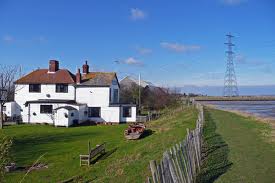
It was a very stormy night, and the Shipwright Arms in Faversham was closed tight for the night. The violent storm had forced a vessel to run aground on the Kentish coast. 

The captain of this ship washed up on the shore—he managed to stagger to the Arms and had just enough energy left to pound upon the door. 

The landlord within hearing the rude knocks ignored them thinking it must be some of that nights’ drunk customers returned for another drink. The landlord, unconcerned, fell back asleep. 

The next morning being Christmas, the landlord had no reason to open his door for business, so it wasn’t until noon that he discovered the frozen captains’ dead body near his doorstep.

Ever since, the spirit of the captain has haunted the landlords of the Shipwright Arms. 

He announces his presence with the distinct smell of tobacco and rum. His apparition always appears at Christmas. 

One former landlady who ran the inn encountered the ghost of the captain late one Christmas Eve night. She lay asleep when she awakened to glaring eyes at the foot of her bed. The next morning she realized that the figure she had seen was dressed like the captain who had been described to her.

A more recent landlord at the Arms also encountered the captain’s ghost on Christmas. He was awakened in the middle of the night, he glanced over and realized that something was lying on the other side of the bed; in horror, he realized it was the semi-transparent form of the captain. 

Yet another phenomenon that occurs at the inn late at night, on Christmas Eve, is the ghostly pounding on the front door and windows. When people go to see who is making such a racket, there is no one there.