Showing posts with label monster. Show all posts

Wednesday, August 7, 2019

Scandinavia’s Kraken


Kraken attacking merchant ship, 1830
Pierre Denys de Montfort

Original illustration from
Jules Verne's book, 1870.
In Nordic folklore, the kraken * (hafgufa) was a giant, sea monster that devoured ships and their entire crews.

The belief in this creature terrorized several generations of sailors and fishermen.

This monster dwelled at the bottom of the Greenland Sea off the coasts of Norway, Iceland, and Greenland.

Scary stories of the kraken were told throughout the 1700s and 1800s. The kraken was associated with many superstitions that sailors held. Especially since they loved a good “tall tale.”

It was stated that this enormous monster could swallow men and the largest ships, and even the most immense whales whole. It was believed its many arms could reach up from the depths of the sea and pull down its prey.

Its movements at the bottom of the Greenland Sea was said to resemble underwater volcanic activity.

It was so large—that when it gradually surfaced, bubbling, it was sometimes mistaken for an island.

It would burst up to the surface. Spurting water from its large nostrils, causing circular waves that would go on for miles, which resulted in dangerous currents.

It is believed there were only two krakens for it took massive amounts of fish to sustain them. They would just open their jaws and let the fish swim in, then when their stomachs were full, they would clamp their jaws together.

Fishermen would often take the risk of fishing around the kraken for the catch was exceptional. It is said the kraken would stretch its neck out, and belch out thousands of fish.

There were even stories of ships sailing right through its open jaws and living to tell about it.

Pen and wash drawing
Pierre Denys de Monfort, 1801.
In the 18th Century it was described as “octopus-like” (cephalopod) with spikes protruding from its suckers.

In the Swedish and Norwegian languages, kraken or krake means an unhealthy animal or something that is twisted. In its plural form--kraken, it means octopus.

At one time the Nordic people even felt it was taboo to say the word “kraken” out loud, for it was believed this would summon this horrible monster.

It is believed a real sea creature inspired the origins of this tale—a giant squid that could reach up to 60 feet in length.


*  Note "kraken" is not capitalized in Nordic culture.


In 1830, Alfred Tennyson wrote a sonnet about the kraken.

"Below the thunders of the upper deep;
Far far beneath in teh abysmal sea,
His ancient, dreamless, uninvaded sleep
The kraken sleepeth: faintest sunlights flee
About his shadowy sides; above him swell
Huge sponges of millennial growth and height;
And far away into the sickly light,
From many wonderous grot and secret cell
Unnumber'd and enormous polypi
Winnow with giant arms the slumbering green.
There hath he lain for ages, and will lie
Battening upon huge seaworms in his sleep,
Until the latter fire shall heat the deep;
Then once by man and angels to be seen,
In roaring he shall rise and on the surface die."

Wednesday, April 10, 2019

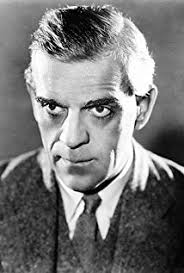
Boris Karloff’s Eerie Rose Garden


Karloff as Frankenstein's
monster

Karloff became an international star, in 1931, with his sympathetic but chilling film portrayal of the “monster” in Mary Shelly’s Frankenstein.

Karloff born, William Henry Pratt in 1887, lived with his parents and nine older siblings in Camberwell, South London.

At the age of nine, he portrayed the Demon King in a youth play of Cinderella and was hooked for life, despite his family’s objections.

In 1909, he moved to Canada. At first, it was not easy. He worked as a day laborer when he couldn’t find acting roles. Then when he did find work, his salary was often reduced because he forgot cues, fell over furniture and mumbled his lines.

Boris Karloff
But he was persistent. He worked for almost a decade perfecting his craft in various theatre companies. He met married and then divorced his first wife during this time—money was often scarce.

He moved to Los Angeles, California in 1918.

He again worked manual labor when he couldn’t find work. He was then was cast as an extra and a character actor in silent films. Karloff’s goal was never to be a star; he just wanted to do what he loved.

Two more wives came and went.

The industry took note of Karloff’s performances first on Broadway in 1930 where he played a convict-turned-killer and then in the sound film Criminal Code in 1931. This provided him with better film roles.

In June of 1931, while eating lunch in the Universal Studio commissary Karloff was asked to screen test for a role as the director, James Whale put it,  “a damned awful monster.” A role Bela Lugosi had turned down.

Karloff admitted, at the time, he viewed it as just another job. But his compassionate betrayal of this monster in Frankenstein captured the world’s attention. It provided him more roles and financial security for the rest of his life.

Film poster of 1945's
Body Snatcher
He had found his niche; he starred in many of the finest horror films Hollywood has made. His last name became synonymous with the macabre.

But today, most of his younger fans remember him most for his Emmy award-winning recording and animated special, in 1966, based upon Dr. Suess’ How the Grinch Stole Christmas where he did the voices for both the Grinch and the narrator.

Karloff worked in film, on the stage, in radio, and on television until his death in 1969.

His favorite pastime outside of acting was gardening. He took special pride in his rose garden.

Karloff's rose garden
Several friends of his made an unusual request. When they died, they wanted their ashes to be spread amidst his beautiful roses.

Karloff with a wry sense of humor and always an agreeable good friend obliged.

Some people believe by doing this he created one of Beverly Hills most haunted places. Visitors to this garden today recount feeling several otherworldly presences. They state these spirits all felt as if they are at peace.

Most agree that their presence here just gives this rose garden an added ambiance.