Sunday, November 13, 2011

English Christmas Ghost Stories: Told After Supper

Recently I shared a little bit about the history of the English Victorian practice of gathering around a warm fire on Christmas Eve in order to share ghost stories. 

This tradition was as prevalent to the English Victorian as Santa Claus is to Americans today. The ghost stories these Victorians shared are fascinating.

Here is more of the history of why the Victorians chose Christmas Eve to share these stories.

The Victorian Christmas was based upon many Roman pagan and Northern European beliefs and traditions that the early Christians adopted. Some of these traditions include the Yule log, holly berries, and even Father Christmas. 

The Victorian Christmas also embraced the winter pagan festival that commemorated the winter solstice. The winter solstice, which is the longest night of the year, symbolized “the death of light and its subsequent rebirth the following day.”

Believing in the death of light resulted in a belief that the winter solstice night was the most haunted night of the year. It was believed that the barriers between the world of the living and the deceased were thinnest on this day. 

Therefore on Christmas Eve ghosts could walk the earth and finish unsettled business. The character of Marley in Charles Dickens’ A Christmas Carol epitomized this concept.

As mentioned in my previous two posts on this subject this tradition is almost completely forgotten today in America. In England ghost stories are still shared at this time of year.* The stories that were told during this period of time should not be forgotten—they represent a rich literature history.

            “Whenever five or six English-speaking people meet round the fire on Christmas Eve, they start telling each other ghost stories.”

            “Nothing satisfies us on Christmas Eve but to hear each other tell authentic anecdotes about spectres.”

                                                                        ---Jerome K. Jerome

Jerome K. Jerome an English writer and humorist wrote these words as part of an introduction to an anthology he wrote in 1891 entitled Told After Supper. This is a superb collection of stories that the Victorians told each other on Christmas Eve. 

Click on the link below to hear an audio version of Jerome’s book. This audio player shares the entire book one section after another. The first part is a wonderful overview of the kind of stories that were told. Then the following sections share just a few “true ghost stories that were told.”

Free Audio Books - Told after Supper by Jerome K. Jerome

* Another reason ghost stories became popular at Christmas time in Victorian England was this was a relatively cheap entertainment for the aspiring middle classes. Starting in the 1840's publishers were able to produce cheaper special editions for serials and magazines. These stories were often ghost stories. 

Charles Dicken's twopenny weekly "Household Words" launched in 1856, always had a short story in its Christmas edition and this story was more often than not a ghost story. He also wrote ghost stories for its successor "All The Year Round". 

So these ghost stories became an integral part of the Victorian Christmas. Read around the fire, they were popular home amusement in those households that could not afford the expense of going to the theatre or a concert.

Thursday, November 10, 2011

Christmas Jump Story


In my last post I talked about the Victorian English tradition of telling ghost stories at Christmas Eve. These stories are often more fable than scary; all were shared for their entertainment value. The following story was often told in English households on Christmas Eve it is inspired by William Shakespeare’s The Winter’s Tale. It is also as the ending will attest a traditional jump story.

John Poole lived in house once owned by the local priest. It was situated so that its back windows looked upon the local churchyard. It was said the local priest had moved away with his wife for she did not like the view especially at night. Poole a widower lived in the house alone. He was not a friendly man so he spent his days very much by himself.

During this time it was the custom to bury people at night by torchlight. It was remarked upon that John Poole was always at one of his back windows looking upon these funeral ceremonies. One stormy winters night Poole watched as the old Wilkins women was buried. She was an ugly hag known to be stingy and cruel. Bad luck followed her and even the beggars in the town would not knock upon her door. To the surprise of all she left a large sum of money to the church but she was so disliked a large fee had to be paid to the bearers and torch carriers that accompanied her body to the churchyard.

As Poole watched from his window he took note that she was buried in a woolen without a coffin and that no one attended except those few men who were paid. Just before her grave was filled in the parson stooped down and cast something upon her body—it clinked as it landed. The parson in a low voice stated, “Thy money perish with thee.” He and the rest hurried away leaving only one torch and the sexton to shovel the earth in.

The next day being Sunday the churchgoers noticed how untidy this fresh grave was in comparison to the rest. They criticized the sexton for a sloppy job. When he inspected the grave he was concerned for it looked worse than when he left it.

Presently the locals had yet another surprise, John Poole started to be seen out and about. People noted he appeared happy but nervous. He spent more than one evening at the inn, which was very unusual considering his normal unsociable habits. He hinted that he had come into some extra cash and was looking for a better house. The smith patted him on the back and stated, “Well it is about time, that house is too spooky by far. I imagine you fancy all kinds of scary things at night. They say old Wilkin’s grave has been disturbed. If I were you I’d be worried she might climb up to my bedroom window one night.”

The landlord intervened, “Don’t be scaring our friend here.” He glanced at Poole with a fatherly concern. “But they do say there are lights in the yard when no is about, do you ever see the lights, Master Poole?”

Poole now in a foul mood denied ever seeing any lights and sulked over to a dark corner table with another drink. He headed home later than he had planned. Once home he found himself in bed unable to sleep. The wind outside lashed out at the house. He crossed to a cupboard in the wall and took something out that clinked and tucked it inside his nightshirt pocket. He went to the window that framed the churchyard.

The drink or his imagination was playing a trick on him for he thought he saw a figure draped in a shroud. The shroud was bunched together at the top in an odd manner. This figure was near the grave in a part of the yard that Poole knew very well—he darted back to his bed and lay there very still.

A few moments later he heard something rattle the casement of the window. With dread he turned his eyes in that direction. Outlined in the moonlight was a curiously bunched head—then there was a figure in the room. Dry earth pelted the floor.

A low cracked voice said, “Where is it?” Faltering steps rustled back and forth with difficulty. The figure peered into corners, stooped to look under chairs; finally it fumbled with the doors of the cupboard in the wall, throwing them open.

Poole heard a scratching of nails on the empty shelves. The figure whipped around, stood for an instance at the side of his bed, raised its arms, and screamed hoarsely, “YOU’VE GOT IT!”

At this point the teller of the story lunges toward the closest or most scared listener of the story…

Monday, November 7, 2011

The Tradition of Ghost Stories at Christmas


A long time ago, I read an interesting question posed on an English forum about when the tradition of telling ghost stories at Christmastime first came about. The responses to this question were so compelling I started to wonder how this tradition evolved. Even to me, it is an odd connection. 

My research led me to this fact—the English Victorians shaped the Christmas that many Americans celebrate today—and one fact about the English Victorians is they loved telling ghost stories on Christmas Eve. This tradition is all but lost in America today. The British, however, showed ghost stories near Christmas on television up until more recent years.

An early example of this Victorian tradition is Charles Dickens’ story A Christmas Carol. Some state that the English told ghost stories around the holidays because this was when most new literature was published. 

Others state that the tradition came about because winter brings the longest nights of the year, which lends itself nicely to the telling of ghost stories. Yet others speculate that ghost stories were told to overly excited children during the holidays to help them expel some of their excess energy. 

Regardless of its origins, this tradition in part jumped the Atlantic and played a small role in America 160 years ago.

An  example of this is Henry James’ The Turn of the Screw, which has a group of friends sitting around the hearth on Christmas Eve telling a terrifying and sinister ghost story. 

Another is in the Christmas song It’s the Most Wonderful Time of the Year, where one line states, “there’ll be scary ghost stories and tales of the glories of Christmases long, long ago.” 


More recently Tim Burton’s The Nightmare Before Christmas reflects a lingering interest in ghosts during the holidays.

Some object to this connection between the ghost story and Christmas--they state it has pagan beginnings. Regardless, even in the mid 19th century, it only played a tiny part as mentioned above in American Christmas traditions, so I feel this is a non-issue.

Another possible reason for this tradition is that many believe that spirit activity is more pronounced in the colder months of the year. Some even state that snow makes for a more proper setting for the telling of ghost stories. 

One ghost story told by the English Victorians involved a shipwreck and a sailor, this story was not only told at Christmas but also happened on Christmas.

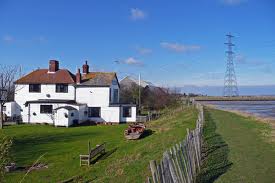
It was a very stormy night, and the Shipwright Arms in Faversham was closed tight for the night. The violent storm had forced a vessel to run aground on the Kentish coast. 

The captain of this ship washed up on the shore—he managed to stagger to the Arms and had just enough energy left to pound upon the door. 

The landlord within hearing the rude knocks ignored them thinking it must be some of that nights’ drunk customers returned for another drink. The landlord, unconcerned, fell back asleep. 

The next morning being Christmas, the landlord had no reason to open his door for business, so it wasn’t until noon that he discovered the frozen captains’ dead body near his doorstep.

Ever since, the spirit of the captain has haunted the landlords of the Shipwright Arms. 

He announces his presence with the distinct smell of tobacco and rum. His apparition always appears at Christmas. 

One former landlady who ran the inn encountered the ghost of the captain late one Christmas Eve night. She lay asleep when she awakened to glaring eyes at the foot of her bed. The next morning she realized that the figure she had seen was dressed like the captain who had been described to her.

A more recent landlord at the Arms also encountered the captain’s ghost on Christmas. He was awakened in the middle of the night, he glanced over and realized that something was lying on the other side of the bed; in horror, he realized it was the semi-transparent form of the captain. 

Yet another phenomenon that occurs at the inn late at night, on Christmas Eve, is the ghostly pounding on the front door and windows. When people go to see who is making such a racket, there is no one there.

Friday, October 28, 2011

Haunted Alcatraz


I wrote a post about one of the most famous ghosts of Alcatraz, Robert Stroud. Stroud is not the only ghost that has been seen at Alcatraz over the years. Alcatraz first housed prisoners in the late 1850s. These first inmates were military prisoners who were put to work building a new prison. The U.S. Army used the island until 1933 at which point the U.S. Government decided to use Alcatraz or “The Rock” as  a maximum-security prison that could house the most incorrigible inmates.

When a prisoner was bought to The Rock they knew that life was not going to be easy. Alcatraz was structured to only provide food, clothing, shelter and medical care. All other basic needs had to be earned. Some of the incorrigibles that were sent to Alcatraz included famous criminals such as Al Capone, George “Machine-Gun” Kelly, Alvin Karpis and Arthur “Doc” Barker. Unlike other prisons the prisoners could not manipulate special privileges from the guards.

Alcatraz was known for its tough discipline. Any prisoner refusing to follow the rules risked being placed in the Strip Cell. This cell was located on the lower tier of Cell Block D. It  was a steel cell, where inmates were stripped naked and given only water and bread. A mattress was placed on the floor at night and then removed every morning. The cell’s toilet was a hole in the cell floor also there was no sink in this cell. When prisoners where placed in the Strip Cell they had no contact with other inmates and their time was spent in pitch-darkness.

Other punishment cells located on D Block were known as “holes” they were also located on the lower tier. In these cells prisoners were kept in isolation for nineteen days. They had a sink, toilet, one light bulb, and a mattress that was removed in the morning.

Alcatraz was closed in 1963 because it was found that it would cost too much to repair the crumbling prison. In later years the Parks Service reopened parts of the island and prison for daily public tours. At this point rumors of torture began to emerge. It was felt that since Alcatraz was on an isolated island away from public view that the inmates were probably tortured and that “their tortured and bitter spirits were now haunting the halls of the prison.”

One area that is known to be haunted is the Utility Corridor. It is here that inmates Coy, Cretzer and Hubbard were plummeted with bullets during their attempt to escape. In 1976 a security guard making his nightly rounds reported hearing unexplained eerie clanging sounds coming from this corridor.  

Another active area is Cell 14D this is one of the original “hole” cells. Both visitors and employees have reported feeling cold chills along with an intense presence in this cell. It was in this cell in the 1940s that a prisoner who was locked in-- screamed the whole night-- claiming there was a creature with glowing eyes trying to kill him. The next day the guards found this prisoner dead, he had apparently been strangled. Later that day several guards reported seeing this same inmate in line with others and then he just vanished.

There are many more areas that are haunted at Alcatraz. In a future post I will describe these areas and their ghostly presences.