Showing posts with label myth. Show all posts

Sunday, December 6, 2015

Myrtles Plantation: Chloe and The Mirror


The haunting connected to the Myrtles Plantation located in St. Francisville, Louisiana is one of the better-known ghost stories in America. But researchers point to the fact that it is more myth than reality.

The plantation today is a bed and breakfast. The legend states that the Myrtles is haunted by a former slave that is seen roaming the grounds and that she and her victims also haunt one mirror located in the main house.

Myrtles Plantation


Bradford was the first to
see a ghost on the plantation.
A naked Indian girl.
A former Pennsylvania lawyer Whiskey Dave Bradford built the Myrtles home in 1796. The plantation sits on a Tunica Indian burial ground. The property was eventually passed on to his daughter Sara and her husband Judge Clark Woodruff in the 1820s.

The Woodruffs had three children, Cornelia, Jane, and Mary. They owned slaves, and one of these slaves a pretty young field hand by the name of Chloe is said to have been promoted to a house slave to act as governess for the Woodruff children.

Chloe supposedly was so grateful for her new position that when the Judge, who was a womanizer, approached her for sexual favors, she went along to keep her new job.

Being the Judge’s mistress, Chloe now felt her new status was safe and she would be able to remain in the house. But Judge Woodruff had a wandering eye, and it wasn’t long before he became bored with Chloe.

When the Judge rejected Chloe she became obsessed with the fact that she might be sent back to the fields. Becoming increasingly paranoid she began to eavesdrop on the Judge’s private conversations.

But the Judge caught her listening one-day and ordered that one of her ears be chopped off as punishment. For the rest of her short life, Chloe wore a green turban wrapped around her head so no one would see her wound.

Now afraid she would be doomed to hard labor for the rest of her life she began to plot how she could become indispensable to the Woodruffs so she could remain a house slave.

She came up with a plan to give the family a small amount of poison to make them ill—then she would prove her worth by nursing them all back to health.

Making a cake for Cornelia’s upcoming birthday, Chloe crushed oleander leaves, boiled them and put this water into the cake. Unfortunately, she used too much, and the result was Sara and two of her children, Cornelia and Jane died.

The Judge and baby Mary did not eat the cake, so they survived.

Chloe told another slave what she had done, and soon the word spread. The rest of the slaves worried they would be implicated in these deaths decided to tell the judge--in order to gain favor.

They lynched Chloe and then weighted her body with rocks and threw it into a nearby river.

It wasn’t long before witnesses began to see Chloe’s ghost roaming the plantation grounds. She was recognized because this figure wore a green turban. 

A story then circulated that her ghost also haunted a mirror that hung in the dining room where the family members died.

Myrtles haunted mirror.
In more recent years other witnesses have come forward to state that Chloe’s victims, Sara Woodruff and her two children also haunt this mirror.

The reason given as to why this mirror is haunted is based on an old superstition connected to death and mirrors. It is said the Judge sealed off this dining room shortly after the deaths—no one was allowed to enter the room for years.

Because of this the mirror was left uncovered during the mourning period for his family and then when Chloe was hanged, it trapped all four of their spirits in the mirror’s reflection.

For some, the story above has been proven to be just an entertaining myth. 

Many have debunked the spirits spotted in the hallway mirror at the plantation as being just “matrixing.” An explanation of this term is located in another post, here.

Others point to the fact that this mirror probably wasn’t in the plantation home at the time the Woodruffs lived there. It is believed that the Myers who owned the Myrtles in the 1970s bought this mirror in New Orleans feeling it matched the plantations décor.

Despite these arguments, many still believe Chloe haunts the Myrtles Plantation. 

Witnesses state they have seen her apparition as well as the ghosts of the Woodruff children.

This photo is said to be a ghost captured on film at Myrtles Plantation.

Some believe Chloe's ghost was captured in the following famous photo taken at the plantation. 
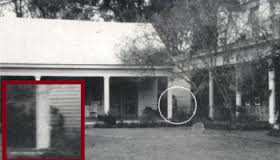
Photo of Chloe's ghost.

Friday, September 11, 2015

Is the Crying Boy Painting Cursed?


Regardless of the truth of the stories that surround this painting many families that have owned a print of this painting state that at least one member of their family found the picture to be “creepy.”


An Italian artist or Spanish artist by the name Bruno Amadio—no one seems to know for sure--did the original painting. The picture depicts a young boy, an orphan, of around 4 years of age who is crying. Other versions of this original painting have been done since.

One version of the print.
A print of the Crying Boy was mass-produced and distributed in the UK starting in the 1950s. In the mid-1980s the many prints of this painting gained the reputation of being cursed and sometimes even haunted.

This story took shape when the British tabloid The Sun published an article in September of 1985 that shared a story that a firefighter from Yorkshire, Peter Hall told. According to Hall unscathed Crying Boy prints were found in 40 to 50 homes that had burned down.

Hall went on to state that a fire had even ravaged his brother’s home but that his print of the Crying Boy remained undamaged. This story also stated that because of these fires other firefighters would not place a print of this picture in their homes.

The Sun * kept this story alive by having readers send in their Crying Boy prints. They then made a big deal of burning these pictures in a large bonfire in November of 1985.

Another version of the print.
* Other British sensation tabloids that picked up on this story were The Daily Mirror and The Daily Star.

Original Sun story.
To add fuel to the fire-- pun intended—The Sun circulated the untrue story that while some of these “sent in” prints were being stored in a warehouse--they caused this structure to burn down.

This story then took on a life of its own with tales circulating that the original artists’ studio had burned down and shortly after the young boy depicted in the picture was killed in a car crash.

Thousands of prints of this picture have been bought—the curse is said to affect all of these prints but with the caveat that the owner must be aware of the curse first.

Yet another story stated if the owners of the prints “were kind to it” it would actually bring them good luck.

In a departure from the curse story, others stated the young orphans’ ghost haunts all the prints because of the tragic way he died.

Steve Punt, a British writer, and comedian investigated this curse for the BBC. This production concluded that these prints did not burn because a fire resistant varnish was used on them.

But many people who have experienced these fires do believe in this curse. They state this BBC production did not explain why the wooden frames and string that held these prints on the wall also did not burn.

Here is a link to an article that maps how this story became so huge.

The video below shows a “test” presented on Steve Punt’s show entitled, Punt Pl. An attempt is made to burn a Crying Boy print.

Wednesday, March 25, 2015

Inez Clarke: A Real Haunting or Myth?

Stories about cemetery statues coming to life are a popular ghost sub-genre.

One of the most beloved of these tales involves a statue of a pretty six-year-old girl wearing a frilly dress and sitting in a rustic log chair. Her name was Inez Clarke, and the figure that marks her grave is enclosed in a glass box.

Inscribed below this case:

Click to enlarge
Daughter of
J.N. and M.C. Clarke
Born Sep. 20, 1873
Died Aug. 1, 1880

This impressive sculpture is located at Graceland Cemetery outside Chicago, Illinois.

Inez was buried at Graceland in 1880. According to one legend, she died when her parents forced her outdoors into a thunderstorm as punishment.

When she was struck by a thunderbolt and killed her parents now guilt-ridden told others that she died of tuberculosis.

A subtler story told is that Inez was on a picnic with her parents when a sudden storm moved in. She was hit by a thunderbolt and killed instantly. Her parents inconsolable had a lovely statue made and placed at her grave in remembrance of their daughter.

Shortly after her burial, it is said Inez was not able to rest in peace. Rumors began that she haunted her gravesite. Her ghost was seen near her statue and also seen meandering throughout the cemetery.

Credible witnesses state they saw a little girl dressed in an old-fashioned dress playing next to the glass-encased statue. Others report they heard crying or moaning coming from this plot.


Children most often see her ghost. They state they run and play with her.

One cemetery night watchman quit his job after spotting the case empty during a violent thunderstorm. He was scared the stories about Inez’ ghost were true.

After this, rumors spread that the statue would come to life during storms.

This entire story was supposedly debunked in 1910 when staff contacted the Clarke family which they thought was connected to Inez. This family knew about the old tales but denied the connection.

Soon after it was discovered that there was no one by the name of Inez Clarke in the local US Census in the late 19th century.

It was also discovered that Inez’ grave was actually the burial plot for an eight-year-old boy named Amos Briggs.

Then an explanation was given as to why this statue was above his grave. It was stated a Scottish sculptor offered it to the cemetery. Graceland accepted it but did not put much thought into where they placed it.

Grandparents buried at left.
But this old explanation does not explain the inscription below Inez’s statue.

Recently, new research points to the fact Inez is buried here. She was the daughter of Mary Clarke who had her during her first marriage. So Inez’ real last name was “Briggs.”

Inez went to live with her grandparents after her parents divorced. The name “Inez Briggs”--seven years old--does appear in the 1880 Chicago Census report. Inez was living with her grandparents at the time of her death--the cause was diphtheria.

Her grandparents most likely had the statue made. More proof that this is the real story is her grandparents, David and Jenny Rothrock are buried right next to her grave at Graceland. 

Below is a copy of the 1880 Chicago Census that shows Inez living with her grandparents.
Click to enlarge

Tuesday, December 30, 2014

Dartmoor: The Legend of Cutty Dyer

The moors in Dartmoor cover 368 square miles. This area located in the South Devon countryside in England is considered to be one of the spookiest places on earth.

These moors misty bleakness and changeable weather conditions are most likely responsible for this reputation. Because of this, the area has inspired an incredible assortment of myths, legends and ghost tales--notably Arthur Conan Doyle’s The Hound of The Baskervilles.

In the future, I will share more of these tales.

One myth told by the locals in the town of Ashburton that sits on the border of Dartmoor  is a cautionary tale told to children and drunks to warn them about misbehavior and being too close to the water.

The story of Ashburton’s Cutty Dryer--sometimes spelled “Kutty.” is its most popular myth.

An Evil Water Sprite

Cutty Dyer is an evil little water sprite or ogre that lives under bridges along the Yeo River. One version states he is seen near Williams Crossing and the town hall in Ashburton.

Generations of this town’s “naughty” children have been warned to keep away from the Yeo or Cutty Dyer would cut their throats and drink their blood.

Stories about this ogre state he has no fondness for drunks. It is said persons that are inebriated fall victim to the same fate.

One account that describes  Cutty Dyer was published in the “Devonshire Association of Science, Literature, and Art in 1879.

“Old Townspeople of Ashburton recollect well the dread of their lives when children, was a mysterious being supposed to inhabit the river Yeo, with whose displeasure and its undefined consequences they were threatened by parents and nurses as a punishment for disobedience and childish frolics.

To the generation before, namely, to our great grandparents, “Cutty Dyer” was the dread of their more matured years, and was supposed to inflict summary punishment on topers as they reeled with difficulty by night through the dark streets to their houses.”

This account went on to describe what Cutty Dryer looked like.

“He was described by persons who saw him as being very tall, standing in the water to his waist, with red eyes as large as saucers, endeavoring to pull them into the water. When the stream was bridged he remained only a scare to children, and on the streets being lighted disappeared altogether.


 Two Witnesses

Two adult witnesses encountered Cutty Dyer at William Crossing late one night.

The two men were walking along the bank of Yeo when they saw an ogre with “great goggle-eyes, black hair hanging over his shoulders in twisted snake-like locks, a beard of the same color, and teeth like a shark.

Luckily, these two were able to escape unharmed.

This story is still used today in Ashburton as a warning.

In one recent BBC interview the town clerk, John Germon notes that this story worked, for he and his friends when young were so afraid of the water sprite that cut children’s throats, they stayed away from the area.

In another post, I share the tale of La Llorona. This legend is told in New Mexico--it is also used to warn children to stay away from water. How La Llorona does this can be found here.

Monday, December 8, 2014

Maid of the Mist: A False Legend , Part ll

In Part l of this post, an overview is given of the controversy that surrounds the tale of  “Maid of the Mist” better known as Legend of Lelawala.

This controversy started in the 17th century when this tale was used to falsely represent the Haudenosaunee/Iroquois culture.

The natives took offense for this tale stated they practice human sacrifice to appease one of their Gods. It also misrepresented the actual positive role woman take in their culture.

The first tale below-- Legend of Lelawala was told for years to tourists as they rode on the  “Maid of the Mist” boat tours around Niagara Falls. It was represented as being a true reflection of the Haudenosaunee culture.

The second tale below-- The True Maid of the Mist is a legend that actually represents the Native Haudenosaunee people, their culture and what is important to them.

Legend of Lelawala

Long ago, the peaceful tribe of the Origiaras lived beside the Niagara River.

Members of this tribe began to die for some unknown reason. It was believed to stop these deaths they must appease the Thunder God Hinum, who lived with his two sons below Niagara Falls.

At first, the Indians sent canoes laden with fruit, flowers, and game over the Falls but members of the tribe continued to die.

The Indians then began to sacrifice one beautiful maiden of the tribe each year that was selected during a ceremony.

One year, the chief’s daughter Lelawala was chosen. On an appointed day, Lelawala appeared on the riverbank above the Falls. She wore a white deerskin robe and a wreath of woodland flowers in her hair.

She stepped into a birch canoe and plunged over the Falls to her death. Her father, heartbroken, leaped into his boat and followed her.

Hinum’s two sons caught Lelawala in their arms. They both desired her, so she promised to accept the brother who told her the reason why her people were dying.

The younger brother told her it was a giant water snake that lay at the bottom of the river. Once a year this monster snake grew hungry, and at night it entered the village and poisoned the water. This snake then devoured the dead.

Lelawala appeared as a spirit before her people and told them they must kill this serpent. Indian braves then mortally wounded the snake on his next yearly visit to the village.

As he returned to his lair on the river, the snake caught his head on the side of the river and his tail on the other, forming a semi-circle that became, Horseshoe Falls.

Horseshoe Falls
Lelawala later returned to the cave of the God Hinum, where she reigns as the Maid of the Mist.

The True Maid of the Mist

The elders tell this story to the next generation.

At one time the Six Nations were one with the world. They talked with the earth, the sky, the moon, and the stars. They knew the plants and animals were their brothers.

Because of this, they knew themselves.

The Thunder God taught them about what is and what will be. Because the people knew these things, they were at peace, filled with love and understood the wholeness of the world.

But as time passed the people forgot. They did not listen anymore when the stars and animals talked to them. As they forgot, their oneness with the world and each other was lost.

The people no longer heard the words of the Thunder God.

Now the people were selfish, mistrustful and jealous of each other. They felt resentment and hate.

The Maid

A young girl who lived among the people near the Niagara River one afternoon lay under a tree in the hot summer sun. She fell asleep.

As she slept an old woman passed by. This woman saw a snake-like creature crawl underneath the young girl’s dress.

Sadly, the woman not caring did not wake the young girl to tell her what she had seen.

The girl became a young woman still not knowing what had happened that summer afternoon.

She fell in love and married, but it didn’t last long for her husband died. She then met another man and married, but he too died before they could start a family.

The young woman found happiness again and married for the 3rd time but alas this husband died as well.

She was confused and afraid. She felt there must be something wrong with her.

But there was no one she could confide in for the people were disconnected from each other--they were further down the path of selfishness and mistrust.

Embarrassed and with no one to turn to for help the young woman decided to kill herself.

One night she put a canoe in the river above Niagara. She climbed in and pushed out into the rushing current. Her boat followed the rapids over the edge of the Falls.

Base of Falls
But she did not fall to her death. Instead, she felt her canoe gently lowered to the base of the Falls. Here she heard voices and whispers in the darkness.

She felt hands drawing her out of the canoe. She was taken behind the Falls where she saw many people. They were the Thunder Beings. They told her what had happened to her as a young girl.

They brought medicine and they built a small fire and as the smoke arose around her a tiny slithering creature dropped out of her dress and crawled away.

Now made too powerful, she could not return home immediately.

The Thunder God adopted her, and she lived with them for four years. They taught her the teachings of the Creator.

She was then told she could return home. She married again and was able to have children.

She shared the Creator’s teachings with her people. They now remembered and listened. They were again able to live in peace and “became one” once more.


In Part l of Maid of theMist: A Lie I share the origin of the false tale.

Maid of the Mist: A False Legend, Part l

Thousands of tourists from all over the world have boarded “Maid of the Mist” boats at Niagara Falls in order to get a closer look at the falls.


Maid of the Mist tour.

When this corporation based out of New York began these tours in 1846 they capitalized on a local legend entitled the “Maid of the Mist” that had been told since the 17th century. They even named their boats after it.

When they told this tale on their inaugural voyage it was considered to be fact. Up until recent years, this tale was still told on a recording that played on these tours.

The Six Nations of the Haudenosaunee * or Iroquois people had a major problem with this story being told. For this tale known more specifically as The Legend of Lelawala misrepresented their culture and traditions.

Recently, the president of the Maid of the Mist Corp. agreed to stop playing this tale on his boats when Seneca Nation members with other Haudenosaunee support threatened to protest his company if they did not stop promoting this incorrect version of the tale to its customers.

* Haudenosaunee is said “Ho dee noes ho nee” meaning-- People Building a Long House.

Long House

A False Legend

The man most to blame for this false tale was Robert Cavelier de La Salle. He was a European explorer that made contact with the Iroquois in 1679.

He traded his knowledge on guns and ammunition in exchange for the Native people giving him information on agriculture, hunting and gathering techniques.

In his writings about his visit with the Haudenosaunee he mentions that they practiced “human sacrifice.”

Young pretty maidens were sent to their deaths in a canoe over Niagara Falls. He states he witnessed this firsthand.

He writes that he watched as a virgin maiden--a chief’s daughter named Lelawala was chosen as that years’ sacrifice--this was to appease a God that was killing off the Indians.

At the last moment the chief changed his mind and darted after her in his own canoe but both fell over the Falls to their deaths.

Years later, de La Salle’s wife announced her husband’s account was false. She stated he had wanted to portray the Haudenosaunee as an “ignorant people.” The reason for this was to make it easy to take their land so they could colonize the area.

So her husband set out to “demonize” them so there would be no sympathy for them, and even more important so the colonization would not be opposed.

He also hoped the dark picture he painted would meet with approval from the King and Queen of France. Their financial backing was needed for more expeditions.

The Haudenosaunee people treated de La Salle with “intelligence and hospitality” --this makes his false representations even worse.

A Cruel God and Human Sacrifice

The Haudenosaunee especially took offense at to two concepts presented in the Legend of Lelawala. **

First, this legend includes a God, Hirnum that needs to be appeased or he will kill the natives. In contrast, the Haudenosaunee Gods are positive deities. They only want peace and love for the people.

The second part caused an even greater offense. The Haudenosaunee people never performed human sacrifices.

In fact, this culture holds their woman in the highest regard. Unlike the Europeans that came to colonize--the Haudenosaunee woman played critical roles and responsibilities within their government and communities.

Corn farming.
They were one of the first peoples to have suffrage.

** The Legend of Lelawala is based on a real Haudenosaunee legend but the two have little in common--except both maidens go over the Falls.


In Part ll of Maid of the Mist: A Lie I share both the false legend and the real Haudenosaunee legend that it is based upon.