Showing posts with label omens. Show all posts

Sunday, November 22, 2015

Victorian Death Customs and Superstitions, Part ll


Many superstitions surround death. During the Victorian Era, many of these beliefs were off-putting, to say the least.
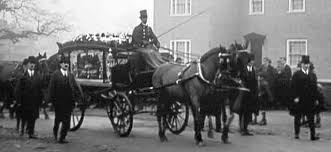

Victorian funeral procession.
Europeans and Americans during this era believed it was bad luck to meet a funeral procession head-on. If one saw one approaching, it was recommended they turn around. If this could not be done, it was said this person should hold on to a button until this funeral cortege passed.

If a clap of thunder was heard it meant the deceased had reached heaven, or if a raindrop fell on a funeral procession, it was said the departed would go to heaven.

If the deceased had led a good life, flowers would bloom on their grave, but if they had been evil, only weeds would grow on their grave.

If a person smelled roses and there were none around, it meant someone was going to die.

If a person saw himself or herself in a dream, their death would surely follow. In another post, the result of a dream that Abraham Lincoln had is shared.

If a sparrow lands on a piano, someone in the home is going to die. Or if a picture falls off the wall, someone close to them will die.

Never wear anything new to a funeral, especially shoes.


If a person heard three knocks, and no one is there, it usually meant someone close to them had died. This superstition is known as “the three knocks of death.”

A single snowdrop in a garden foretells death, as well as the hoot of an owl. If a bird pecks at or crashes into a person’s window, there has been a death.

Large drops of rain warned that there had just been a death.

If a person spills salt, they should throw a pinch over their shoulder, to prevent death.

If it rains on an open grave, it means another family member will die within the year.

One should never speak ill of the dead, because they will come back to haunt that person, or at least bring them misfortune.


In Part l of Victorian Death Customs and Superstitions, several strange customs connected to death are shared.

Sunday, May 10, 2015

Maritime Superstitions, Part ll

Here are more beliefs that are considered to bring ships bad or good luck.

In the 1700s during the height of the South Atlantic and Caribbean trading empire, an interesting superstition at sea began. Bananas were considered a bad omen that brought bad luck.

The reason for this is many ships carrying cargos of bananas during this time had more deaths on board. This was especially true onboard ships that carried African slaves.

The reason for these deaths was twofold. Bananas being cargo were kept in the hold--African slaves were also kept in the hold. Fermented bananas give off a methane gas that became trapped below deck.

Everyone who was in the hold would succumb to this poisonous air. Others that went below deck to help would also die.

The second reason was a species of lethal poisonous spider that was found in bunches of bananas. If these spiders bit humans, they died.


This is why a maritime superstition was connected to bananas. This superstition evolved into a belief that if a sailor brought a banana on board, no fish would be caught.

There are also many superstitions that surround preparations for a sea voyage.

It was believed that a stolen piece of wood embedded into the keel of the ship would bring good luck and help the vessel sail faster. 

Often a silver coin was placed under the masthead to ensure a successful voyage.

A horseshoe was often nailed to a mast to bring good luck to a ship. 

But flowers were never allowed aboard because it was believed since they were connected to funerals they brought death.

Sailors warned others not to wish them “good luck” before they set sail--it was considered a bad omen. If this was mistakenly done, the sailor had to draw blood to avoid bad luck. This was most often accomplished by punching someone in the nose.

Sailors would step onto a ship always with their right foot. 

They would offer wine to the gods before they set off. Today sailors pour a liberal amount of wine right onto the deck.

Once their ship sailed, sailors would not look back. If they looked back, it was believed they were sending a message they were not prepared to begin the journey. It was said this attracted bad luck.

Other superstitious beliefs include: sailors would never to trim hair, shave off their beards or cut their nails at sea, for it was said this angered Neptune, the god of the sea and water.


While underway a sailor would never wear a deceased sailors clothing this was considered terrible luck.

Also while at sea a sailor would never say the number “13” instead they would say 12+1. Other words, a sailor would never utter were “drown” or “pig.”

Losing a bucket overboard, or seeing rats leave a ship were considered bad omens. Flat-footed and cross-eyed people were said to bring a craft terrible luck.

It was also considered bad luck to change a ships name. 

Sailors that had beards or tattoos were said to bring good luck to ships.

A dire superstition involved sailors that fell overboard. They often were not even thrown a rope. This was because sailors believed this man’s death was preordained--meaning, “What the sea wants, the sea will have.”

It was also viewed as an opportune sacrifice. Ancient sailors felt the gods would appreciate this sacrifice and therefore would not take another life from their ship.

In Part l Maritime Superstitions, more beliefs are shared.

Maritime Superstitions, Part 1

Today’s technology allows for much safer sea travel, but these advancements in communications, navigation and weather forecasting are relatively new.

For centuries, maritime travel was hazardous, and the loss of ships and lives was common.


Sailors for hundreds of years had only a set of superstitious practices that they firmly believed would protect them from the sea’s deadly storms. They did not take these beliefs lightly, for they felt if adhered to faithfully they would up their chances of survival.

Today most of these superstitions have been set aside, but some are still practiced more out of tradition than belief. Here are just a few.

Storms at sea took lives, so practices that ensured they would not be stirred up were standard. Sailors never whistled while at sea--it was believed that this stirred the wind causing a storm to hit.

Sailors would never thrown stones into the water for this was considered disrespectful to the sea. It was believed this action would cause a storm.

It was believed cats onboard ships were useful in predicting the weather. Sailors thought that if a cat walked toward them, this meant good luck but if a cat approached them but then retreated it brought misfortune.

When a cat was seen licking its fur against the grain, this meant a hailstorm was imminent. If a cat sneezed rain was on its way, and if they were frisky, the wind would soon blow.

Some sailors even believed cats could incite storms with the magic in their tails. But opposite to most superstitions, black cats were considered good luck for a ship.

Clapping on board was said to bring the thunder. Umbrellas were never carried on board a ship--it was reported this tempted fate.


There were also many superstitious practices that were followed to avoid bringing bad luck or doom to a ship.

Crewmembers with red hair were believed to bring a voyage terrible luck. The only way to avoid this misfortune was for another crewmember to speak to the redhead first before they spoke. 

It was considered a double the bad luck, if a crewmember with red hair, whistled while at sea.

Many captains would not allow their crew to wear green sweaters while on board. For they believed this also brought bad luck. The color black was also considered bad luck. Sailors would not carry their belongings around in a black bag or wear black clothing.

Priests with their black robes were also considered bad luck.

A classic maritime superstition involves woman on board ships. This was considered very bad. For women tempted or distracted the crew from their duties--which could doom a vessel.

On the other hand, naked women were believed to calm the sea--thereby keeping storms at bay. This is why so many ships had a naked woman as their mastheads.

Birds could bring either good or bad luck to a ship. Swallows, when seen, were said to bring good luck, while curlews and cormorants were bad luck.

If a sailor was to kill a gull or an albatross, this was especially troubling for it was believed these two birds held the souls of dead sailors. This belief was also connected to dolphins.


If dolphins were seen swimming in front of a ship, this was said to bring good luck, if sharks were seen following a boat this was considered a harbinger of death.

In Part ll of MaritimeSuperstitions, more traditional beliefs are shared.