Today is one of those
days that some people still dread. Many claim the number 13 has
brought them bad luck. And when it is combined with a Friday--they just will
not take chances.

Triskaidekaphobia is a fear
of the number 13. It is said on Friday the 13th the bad luck this
number brings is tripled.
Superstitions are based in
the belief that something terrible will happen if they are not observed or followed.
Unfortunately, some in history proved to be harmful. But most were not.

Today most are no longer
believed.
Here are just a few superstitions that were
passed down from one generation to the next.
Did you know?
If you go to bed on one side
of the bed and get up on the other side, it is considered bad luck. Through
history many have taken this belief seriously--it is where the phrase: “He or
she got up on the wrong side of the bed” came from.
Did you know?
Superstitions like black cats
crossing your path, breaking mirrors, walking under ladders, and opening an
umbrella inside a building all bring bad luck. This last superstition is useful
for it is challenging to get an opened umbrella through a doorway.
Did you know?
You should never vow your
love for another under a full moon. It dooms it. Hundreds of years ago
humankind felt that the moon was erratic at best. It changes size throughout
the month and completely disappears during eclipses.

Did you know?
When you yawn, you must always
cover your mouth. After all, this is just good manners.

But this belief actually came
about because people felt the devil makes people yawn so he can enter and
possess them. So people would make the sign of the cross over their mouth
initially--this evolved into covering the mouth.
Did you know?
On Friday the 13th,
or on any day, you should never cross a knife and fork on the dinner table. This
is why many traditional place settings place the knife and fork on opposite sides
of the plate. Crossing these two utensils was believed to bring bad luck in the
form of difficult times ahead.

Did you know?
That a gift given to a
recipient should never be given outright. It should be loaned only, or a small
token should be given in return, such as a nickel of penny. This was done
because it was felt a gift given outright meant a severing of the bond of
friendship.
This superstition has some
truth to it. How many times have people loaned money and lost a friend?
Did you know?
Thirteen people should never
sit down and eat at the same table. This brings bad luck-- this superstition
comes from the “Last Supper.”
 |
| The Last Supper |
Another superstition states
if 13 people meet in one room, one of them will die before the end of the year.
Yet another superstition that
involves the number 13 is one that is still practiced. Most tall buildings
still do not acknowledge there is a 13th floor.
Did you know?
That you should never go out
on a first date on a Friday night. Of course, today Friday is date night--but in
the past, people felt a courtship was doomed if started on a Friday night.
In England, hundreds of years
ago, if a young couple was seen out on a Friday night, they were serenaded with
the banging of pots and pans, to shame or embarrass them into delaying their
courtship until the following day.
Did you know?
It was initially believed
broken mirrors brought 7 years of bad luck because they not only were a
reflection of the person--they held bits of a person’s soul.

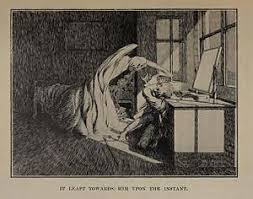
Another superstition surrounding mirrors was that it was essential to cover them, in the presence of the sick and dying.
If this was not done, it was believed the patient might see death lurking in the
reflection.
Did you know?
Bringing a woman on board a
boat or ship was considered bad luck. An old maritime superstitious belief was a
female’s presence, could endanger the crew. It was even believed a female could
cause everyone on board to die.
Did you know?
Another maritime superstition involves the tradition that no one on board a boat could speak the
name of one particular fish. It was called: The beast, the redfish, the foul
fish, or merely the fish. But it was never called by its real name--salmon.