At one time newspapers all
over America published stories about people’s strange experiences with
“ghosts.” In the late 1800s and early 1900s The
New York Times published many of these stories . . .
Clinton Street, Brooklyn, NY 1878
Here is just one, published
in December of 1878, that was eventually solved with a “wing and a prayer.”
Edward F. Smith, his wife,
two daughters and a border began to experience strange activity at their home
on Clinton Avenue in Brooklyn, N.Y.
For three weeks, shortly before
Christmas, between the hours of 5:00 p.m. and midnight their doorbell began to
ring. When Smith would go to answer it no one was there.
New York Times article
“Their quiet life was seriously disturbed three weeks
ago, when one night Mr. Smith went to the door three or four times in response
to the ringing of the bell, and every time was surprised to find no one there.”
After the doorbell would stop
ringing, a loud rattling or banging was heard coming from the home’s two back
doors.
“They rattled as if they would part from their
hinges.”
Concerned that this disturbance
was becoming a nightly occurrence, Smith elicited the help of family and
friends to determine what was happening.
But even with people
stationed throughout the home and outside no one was able to pinpoint the
cause.
Smith sprinkled ashes and
flour along the paths that led to his doors—expecting to see footprints but
none appeared.
Not getting any sleep, Smith finally was
able to persuade the police to investigate. A captain and a detective visited
the home but they were unable to determine what was going on, so the next night
they brought reinforcements.
This night besides the
noises, a brick flew through the dining room window. The officers outside
“swore” they had seen no one near the path that passed this window.
The police searched the home
for hidden wires or anything else that might be causing this activity but they
discovered nothing.
At first, Smith stated he was
skeptical that the strange phenomena taking place was supernatural * in
nature—but later he became convinced this must be the cause.
In a follow-up article on
December 21, 1878, The New York Times
reported that Smith had finally solved his problem. Determining the devil
himself must be causing this commotion—he prayed—and the activity stopped.
Sag Harbor’s Armed Ghost is a
another ghost story I wrote about that the Times published in the late 1890s.
* The word “supernatural” was
widely used in this era. The word paranormal had not been invented yet.
Holy Cross, located in
Marquette, Michigan, opened its doors in 1915.
Many of its residents over the
years were not actually orphans.
In fact, one of the first
groups to use the building was 80 Native American children and 8 nuns. The
Catholic Church had ruthlessly removed these children from their families
intending to “assimilate them.”
Other children sent to Holy
Cross over the years lived with single parents who could not care for them.
In 1963, this orphanage accepted
a group of refugee children from Fidel Castro’s Cuba.
At its peak, this orphanage
housed over 200 residents. The nuns kept a strict schedule for their charges.
Up for breakfast, always
cereal, at 9:00 a.m., classes promptly at 9:00 a.m. and playtime in the
afternoons, always outside, even in bad weather.
Now adults, former residents
of Holy Cross, have reported experiencing extreme mental and physical abuse at
the Orphanage--meter out by the “holy sisters.”
One story shared involves a little girl who stayed outside after the rest of the children had been
called in—by a horn used to announce playtime was over.
It was winter, and a blizzard
hit. She like most of the residents did not have a warm coat. The result was
she caught pneumonia and died.
The nuns callously displayed
this little girl’s body for everyone to see. They used it as a warning to
listen. Former residents state it shocked and horrified them.
The nuns regularly used cruel
punishments to keep the orphans under control. One method used, actually by
many orphanages at the time, was small closets.
The children were placed in
these and kept in complete darkness. Food would be shoved in through a small
hole, and a pot was used for waste.
Another punishment involved
making children stand for hours with their arms outstretched, often holding a
heavy object.
One stark example of the
extreme abuse at Holy Cross mentions some children who misbehaved were beaten
to death.
Abandoned Holy Cross
This orphanage was shut down
in 1965. The building by 1982 stood deserted and boarded up.
Marquette Residents’ state
feeling uneasy when they are near this building, even during the day.
Neighbors have seen ghostly
children playing outside the building and at night, people report hearing the
moans and cries of young children coming from various rooms.
In recent years, this
building has been renovated and turned into apartments. Some state that a fresh
coat of paint will not be enough to stop this haunting.
Many enjoy a good April fool’s joke, but not many know the origins of this day.
Many historians attribute this tradition to France. In1582, France changed to the Gregorian calendar—this switched the New Year day from April 1st to January 1st.
News traveled slow back then so some still celebrated the New Year on April 1st.
Part of this day’s celebrations was to play pranks or jokes on others. People that fell for these jokes were called “fish” because “fish are easy to catch.” Paper fish were tacked to their backs marking them as gullible.
Some people today still refer to people that are easily fooled as fish.
Jonathan Swift
Over a century later, Jonathan Swift the author of Gulliver’s Travels managed to pull off a classic April Fool’s prank. Swift pretended to be an astrologer by the name of Isaac Bickerstaff he then published several predictions.
His most successful prediction, published in January of 1708, stated that a well-known astrologer and almanac maker—John Partridge—would die of a raging fever on March 29th. Swift then reinforced his prank by circulating a rumor anonymously that Partridge had indeed died. * The result was for months Partridge was kept awake at night by mourning fans outside his door. Then on March 30th, he opened his door to a man that informed him he was there to make his funeral arrangements. This joke continued because for the rest of his life Partridge had to insist he was not dead.
The following is a short excerpt from a letter Swift published anonymously about Partridge's death to reinforce his prank:
“I saw him accidentally once or twice about ten days before he died, and observed he began very much to droop and languish, though I hear his friends did not seem to apprehend him in danger. . .”
Seven years later, Partridge did die on March 30th. While alive he never discovered it was Swift who was behind this joke but after he died one account claims, he got revenge.
It states that Partridge’s ghost visited Swift every April Fool’s Day. * Swift enjoyed this prank immensely because he felt Partridge was a quack since he dared to make predictions. Partridge wrote a public statement that he was not dead but Swift countered it with—Partridge could not have written it because who would dare to make a joke about death.
A gruesome murder in 1956
resulted in the first person being hanged indoors at the Old Idaho Penitentiary.
Raymond Allen Snowden was
nicknamed an American version of Jack the Ripper when he brutally murdered a
woman in Garden City. He stabbed Cora Dean, a local woman, and mother of two, 35
times.
During his trial, Snowden
claimed the two got into an argument after a night of drinking. He said he
backhanded Dean and then she kicked him. At this point, he lost it.
He took his one and a quarter
inch pocketknife and slashed her throat first then thrust his blade into the
back of her skull, severing her spinal cord.
He stashed his knife in front
of a cigar store in Boise and then entered the building to use the restroom.
Suspicious employees called the police. His knife was found, and Snowden was
arrested.
Raymond Allen Snowden
Snowden later bragged he had
killed two other women. But the murder of Cora Dean was enough. He was
convicted of murder and sentenced to hang.
In October of 1957,
witnesses, including family members of the victim, gathered on the second floor
of the penitentiary to watch Snowden's execution.
There was a glass window
between them and where Snowden stood on the trapdoors that would end his life.
When an officer released these heavy doors with a lever, their weight smashed
into the window shattering it. Snowden dropped, but the rope
did not snap his neck. Instead, he hung twisting and turning for over 15
minutes gasping for air. Witnesses later stated his gasps and grunts before he suffocated
were nightmarish in tone. The old Idaho penitentiary
has been closed for years. Today it is on the National Register of Historic Places and is run as a museum.
Penitentiary's trapdoors.
Workers and visitors have heard sounds they feel must be Snowden. All state as they stood at
the bottom of the gallows, they heard someone struggling for breath. These
sounds can be heard both day and night.
Witnesses have also come
forward to report feeling and seeing a dark entity in the area near the
solitary confinement cell—nicknamed by the inmates “Siberia.” This entity has
also been seen near the gallows.
This month marks a milestone
for me. It is the beginning of my fifth year writing Seeks Ghosts.
I now have over 1,000 posts.
Make sure and use the blog archive on
the right hand column or the Favorite
Posts or Quick Find to find older
posts. You can also use the Search this Blog button on the right
hand column to find posts about a topic you are interested in.
Once a year I stop and
reflect on how far I have come since I first began to write Seeks Ghosts. I am
grateful for all my loyal readers and hope you continue to return for I place
new posts regularly.
I always receive nice
comments about my stories on Google+, Facebook, my blog and Twitter. If you
like a post be sure and hit the like button at the bottom of the post or on
Google+ and on my Facebook page all entitled-- Seeks Ghosts.
I periodically have people
request help with a haunting on my contact page—unfortunately I do not give
advice long distance. I always recommend readers who request this contact a
group in their local area to help them.
Again, thanks to all, I hope
you enjoy my stories as much as I enjoy writing them.
By the way if any of you are Cancer
survivors or know someone that is and needs support—check at my new blog on
Wordpress entitled, spinningplateslive
In the spring of 1898,
William Cooper returned to his home in Fulton village late one night after
drinking. He and his young wife argued over their farm property. Cooper picked
up his gun and shot at his wife.
His wife now terrified, grabbed their
young daughter, and ran panic-stricken to a neighbor’s farm. Cooper tracked her
down and cruelly shot the neighbors, Charles Smedley and his wife but failed to
kill his wife.
He then committed suicide.
This tragedy was reported in
the New York Times on June 25, 1898.
Some believe this tragedy is the reason why for over a century multiple witnesses have seen a frightened
female apparition running in the vicinity of Seneca Hill near Oswego, New
York.
Seneca Hill is a small
community that sits between Oswego and Fulton.
Witnesses state this ghost
appears terrified as they watched her fleeing with a girl around the age of 6
in tow.
They describe her and the
little girl as barefoot, both wearing white 19th-century nightgowns. Others state she wears a white cap—possibly a nightcap. What they have seen fits the tragic Cooper scene for his wife and daughter were terrified as they fled for their lives.
One male witness states as he was
driving along this road, a barefoot woman, came out of nowhere and stopped right in front
of his car. She was wearing a nightgown, and she appeared to be in a panic.
He watched as this woman ran
up on the porch of a nearby house, she then vanished right through the door. He
asked his wife, who sat next to him if she had seen that? She stated she had
not.
Sightings of this frightened
woman most often occur in July, October, and November. Many occur
during November.
Railroad tracks.
Her ghost has been seen along
Kingdom road and Dutch Ridge road. Her apparition has also been spotted on
Route 481, along the railroad tracks, Route 57, along the shore and Route 45
near Minetto. These sightings are so
prolific that people who have never seen this ghost believe in her.
August Belmont, Jr. was a New York banker, bon vivant, financier, and owner/ breeder of the famous thoroughbred Man o’ War. He put the money up for the first New York City subway line.
This line, the IRT was built between 1902 and 1904. It ran from City Hall to 14th street. Belmont loved this project, and it is said he sometimes worked alongside various construction crews as this railroad was being built.
Even today along this line witnesses report hearing Belmont’s voice shout, “work harder” along this original track.
Once this subway was complete, Belmont had the Wason Manufacturing Company out of Brightwood, Massachusetts, build him a private railroad car—this was to avoid riding in the inevitable overcrowded subway cars.
He arranged for a direct line from the Grand Central Terminal to Belmont Park racetrack on Long Island—Queens. This famous racetrack was named after him * for his passion in life was breeding thoroughbreds.
* Various sources cite August Belmont, Jr. as the inspiration for the name for this track others state it actually was named after his father--Belmont. Sr.
The Mineola
He called his private car the Mineola. He and his guests rode in luxury. The train car contained a galley, with a stove that served steaks. Drinks were also served-- notably chilled Champagne. He often conducted business on his roll-top desk in a Mahoney lined study.
The Mineola was also adorned with silk drapes and a reclining couch.
His wife once noted with humor that, “A private railroad car is not an acquired taste . . . One takes to it immediately.”
This car was in use until 1919. The Mineola now resides at the Shoreline Trolley Museum in East Haven, Connecticut.
It still contains the roll-top desk, the steal 600-volt coffee urn, the unbroken Tiffany glass that adorns the Empire ceiling and the sand used to flush the car’s toilet facility.
There is an effort underway to restore the Mineola to its original beauty.
Witnesses report seeing this car in the spring months—when the ponies run—still making its way down New York’s original subway track.
According to Tom Ogden in his book, Haunted Greenwich Village: Bohemian Banshees, Spooky Sites, and Gonzo Ghost Walks, one witness even entered this car as it stopped at Astor Place. Ogden states this was most likely a time slip as opposed to a traditional haunting.
In another post here, several other time slip encounters are described.
As Mary Post was hanged for
being a British spy during the Revolutionary War in 1777 she placed a curse on the tree used to hang her. Before she died, she stated if anyone harmed this tree, they
would suffer.
More about Mary’s story is
shared in Part l, here.
Camp Glen Gray in the Ramapo
Mountains in northeastern NJ.
The curse placed on this
tree was first documented after a Boy Scout camp was built in 1917 on the
site where Mary Post was hanged. The ancient maple tree still stood on the camp property.
Are the following stories
truth or legend?
In 1935, a scoutmaster
wishing to stamp down belief in this curse cut a limb off the tree to prove the
curse did not exist. Three days later he and his family perished in a house
fire.
Sixteen years later a camp
official attempted to chop down the tree, again to put an end to the legend. As
he fiercely swung an ax at the trunk, it flew back and sliced his throat. He
later died from this wound.
A camper that knew nothing
about the curse unwittingly carved his initials in the tree in 1940. Everything was normal until he
fell asleep in his tent that night. When he awoke the
next morning he felt severe pain, he discovered one of his legs had a
compound fracture.
Camp Glen Gray
Fifteen years later a camp
worker decided to defy the curse. He chopped off pieces of the Mary Post tree
to sell as souvenirs. Soon after he started to have horrible nightmares—they
continued until he went insane. This man lived the rest of his life in an
asylum.
By 1969, this tree was so
diseased New Jersey officials decided to have it chopped down. Two men were
sent to do this job. The first professed he did not believe in the curse—the
night before they were slated to cut down the tree he died of a brain
hemorrhage. His partner left quickly.
Another six years passed and
the tree still stood, but by this time it was dead. Some believed the curse
would now end, but they were wrong.
In 1980 on Friday the 13th a group of 13 men including 3 scouts decided to tempt the old curse.
With chainsaws, they succeeded in felling the tree.
A portion of this tree can
still, be seen at Park Headquarters. When the boy scout camp closed in 2001, Bergen County turned the old camp into a public campground.
So what happened to the 13
who finally felled the tree?
One was killed in a car
accident two weeks after the tree came down. A second man perished in a ski
accident, and the third died of liver disease—he started to drink after he
participated in the felling.
The other 10 participants did
not escape misfortune all suffered bad injuries within 12 months after the tree
came down.
The locals now believed
that the evil that surrounded this maple had finally come to an end but something else
unusual began to happen.
Lake Vreeland
Witnesses reported seeing
Mary Post’s ghost near where she was executed. Then others came forward to
state they saw her at Lake Vreeland near where her inn once stood.
Her ghost is seen floating
above the water unusually late at night in the autumn months. Her apparition
has also been spotted in the nearby-untouched forest.
From 1917 until 2001 this
story was told around a campfire at Camp
Glen Gray, a Boy Scout camp, located in the Ramapo Mountains in northeastern
New Jersey.
Unlike most of the stories
shared at this camp, this one has many elements of truth.
Scouts at Camp Glen Gray in the 1950s.
The scouts that heard this
story were very scared when they discovered the incidents in this story happened right on
the grounds of their camp. It was here in 1777 a Revolutionary War spy
was executed.
The Cannonball Trail ran
through this camp and was used as the main route to transport soldiers and
supplies for the Continental Army. Along this route was a popular stop called
The Mary Post Inn.
Modern-day hikers overlook Yellow
Trail a part of the original
Cannonball Trail.
The proprietor of this
inn—Mary Post—was a beautiful young brunette who enchanted everyone she met.
Continental Soldiers.
American officers including
members of George Washington’s staff often stayed at Mary’s inn. The inn was
known to provide comfortable lodging and delicious food and drink. Mary, a gracious host, regularly participated in the soldier’s conversations with a quick
wit. Unfortunately, these soldiers
often imbibed too much of Mary’s beer and talked too much.
Beginning in 1776, Washington’s staff including Alexander Hamilton-- who served as America’s first
secretary of the treasury—noticed the British had uncanny luck when it came to
capturing the Continental supplies sent along the Cannonball Trail.
The British seemed to know
exactly where to strike each time. The Americans realized a spy was in their
midst. Mary Post immediately came under suspicion.
British grenadiers in 1777 New Jersey.
Hamilton sent Patriot
operatives to watch Mary Post. Their suspicions were confirmed when these men
observed Post mounting a horse late one night. She headed for New York City
where the British were based.
She spent the night with her
British lover, Major Carlton McDonnell.
With this information
Hamilton decided to lay a trap. In early August a group of soldiers requested
Post close the inn so they could hold a high-level strategy meeting. Post
agreed.
As Mary served this group, they discussed a large shipment of equipment and supplies that would pass
by her inn in eight days.
The next night Mary galloped
away on her horse to tell this news to her lover. On Thursday, August 19th
a large contingent of British soldiers descended on the Cannonball Trail near
Mary’s inn.
They expected to waylay and
capture a large Continental supply convoy but instead an elite unit of Patriots
soldiers that were hand-picked by Washington overwhelmed them.
The next day Mary Post was
arrested at her Inn but as she was led out a group of local Patriots took her. Angry,
they beat her ruthlessly then they affixed a hanging rope to a nearby maple tree.
The locals watched as it took 15
minutes for the rope to slowly tighten around Mary’s neck—prolonging her
suffering, which satisfied the revenge-hungry crowd.
Mary’s last weak words were to accuse the British who failed to rescue her. She then cursed the maple tree, stating whoever harmed it would come to know the meaning of pain
and suffering.
No one at the time took this
curse seriously.But this tree would
become the source for death, misery and unexplained incidents in the future. In Part ll of A Revolutionary Spy and a Cursed Hanging Treeread about how this curse
played out and about sightings of Mary Post’s ghost.
Royal Street in New Orleans
has many ghost legends—one of the most tragic is the story of a beautiful young
lady who was an octoroon mistress.
An octoroon is a person that
is one-eighth black by decent.
In the 1800s female octoroons
were freed blacks. They often received the best educations and were members of
wealthy families but societal norms prevented them from marrying white men.
Masked balls were held in New
Orleans were beautiful octoroon women were selected by wealthy French Creoles
men as mistresses.
These women willingly
attended these balls because it meant they would be “kept” in high style—in
fine houses with servants to do their bidding.
One of New Orleans’ most
beloved ghost stories is about a young octoroon mistress called Julie.
In the 1850s Julie who had
stunning dark eyes and beautiful dark hair was living in a fine house on Royal
Street as the mistress to a handsome young wealthy Frenchman.
The two were passionate
lovers. Unfortunately, Julie mistook their passion for real love. Her lover however
viewed her callously as just a “sex slave.”
Julie began to demand
more—she wanted to marry her Frenchman. She was blind to the fact that he might
not return her love and even if he did his position in society would never
allow them to marry.
After months of professing
her love for him he became impatient with her pleadings. In the heat of yet
another argument he challenged her to prove she really “loved him.”
He told her if she loved him and wanted a marriage she would strip naked and go up to the rooftop
of the house for the whole world to see. He then went downstairs to continue
playing cards with a friend.
Julie desperate to prove her
love undressed and waited on the rooftop for his return. It was a cold and damp
December night.
Hours later when he returned
he discovered that Julie was not in their bed. He searched but could not find
her. It then dawned on him she must have taken his threat—issued when he was
angry—seriously.
He ran to the rooftop and
found her frozen naked body huddled in one corner. She was dead.
The legend states this young
Frenchman came to regret his actions for he missed Julie and realized he had
feelings for her.
People that pass by this
house today on Royal Street state that on cold December nights they have seen Julie’s
ghost—naked—pacing the rooftop still waiting for her lover’s return.
The home contains a
business called Bottom of the Cup Psychic
Readings. People who work here and customers report experiencing this
haunting. Julie’s ghost is considered friendly and she is heard giggling
throughout the house.
Her French Creoles lover is
said to haunt the garden outside the home. Witnesses to this haunting state he
emits an air of sadness. So it appears the pair are still connected in death.
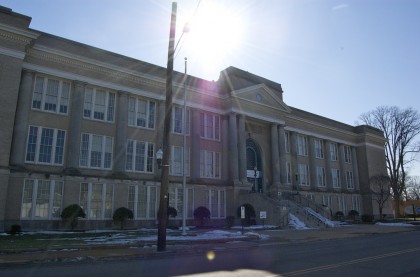
I was the first female
custodian to be hired at the city’s oldest elementary school in the late 1970s.
The original part of the school had been built in 1893.
The building was very large
with 3 stories. My job was to clean all the classrooms,
take out the trash and make sure the doors were secure.
I was to work the night shift
alone and the first day I reported to work I was warned that I should avoid
cleaning the ground floor after dark. This floor made up the original school.
No explanation was given as to
why I was told this.
For the first few months I
went out of my way to make sure I cleaned this floor first but I found I
preferred to start at the top floor and work my way down.
I enjoyed working in the
quiet old school building. Like most old structures this one creaked and
groaned as it settled but I actually took comfort from these sounds.
The ground floor of the school
retained an old world charm. Several of the classrooms still had the mosaic
designed floors and the fireplaces that once had been their only source of
heat.
Each of these ground floor
classrooms had windows that were below ground so each window had what is a
called a window well around them.
One winter night I was in the
largest of these original classrooms. I had gotten a strong sense of sadness in
this room each time I entered it.
This night I placed a chair
in the doorway of this classroom so I could dust the ledge above the door. I
turned to find a dust cloth and when I turned back the chair was no longer in
the doorway but sat several feet away.
I thought it was odd but I
shrugged it off and moved the chair back to the doorway and started to dust the
wood. I stopped when I heard the sounds of small children crying and then I
heard banging on the windows.
Frightened, I got off the
chair and my first thought was to leave the room but when the sounds continued
I approached the windows thinking someone must be hiding in one of the window
wells.
As I drew near these sounds
all stopped.
For the next several months
when I cleaned this room, I continued to hear the crying and banging on the
windows. At one point I called the police but they did not find any
sign of intruders.
I did not talk about what I
was experiencing with other school employees but I now firmly believed the
school must be haunted. I dealt with my frayed nerves by simply ignoring the
strange activity.
The first summer I worked at
the school my schedule was switched to days. One hot afternoon as I weeded the
yard two older women who lived across the street from the school approached me
and offered me a glass of lemonade.
As I drank the cold drink I
found out the two women were sisters and both widows, they had moved back into
their family home. The older sister mentioned that the school had certainly
changed since they had attended it.
Thinking of the noises I had
heard, I asked them if they knew of anything bad ever happening at the school.
They both eagerly nodded their heads “yes.”
The older one who seemed to do
all the talking told me that their family had lived across from the school for
several generations. Their grandfather had attended the school in the late
1800s.
Our grandfather told us that
one day one teacher left her classroom for a dalliance with a male teacher. To
ensure none of her students left the classroom she wedged a chair under the
classroom doorknob.
While she was gone an ember
from the fireplace set the classroom on fire. Her young students trapped, all
perished in the fire. The younger sister jumped in at this point.
“They say the windows in the
room afterwards had to be replaced. The youngsters had beaten on them so hard
that they were stained with blood. This blood wouldn’t wash off.”
A chill ran down my back as I
asked what happened to the teacher. The older sister told me that she was never
seen again. Again the younger sister interrupted.
“Have you seen them? The
children I mean. Have you heard them?”
Just then the head custodian
hollered that I needed to get back to work. Lost in my thoughts, I remembered
to thank the sisters for the lemonade as they crossed the street.
Fall came and once more I was
working the night shift. I could never keep a chair in the doorway of the sad
classroom very long and knowing what I now knew I never closed the door.
The sounds of the crying and
banging started up once more. I decided to try and talk to these young ghosts.
I told them that their parents were waiting for them and they should go.
This seemed to help because
after this I heard fewer voices crying.
Then one night as I was
working on the 2nd floor I was saved from an injury or even death.
As I approached one classroom I heard a strange squeaking above my head. I
looked up but saw nothing.
As I stepped over the
threshold I heard a child’s voice yell, “No.” Then something shoved me backward
with such force I fell on my bottom. It was then a loud crashing noise came
from the classroom.
The heavy overhead lights had fallen to the ground. Plaster from the ceiling covered the desks and floor. I
started to shake realizing what a close call I had. I was grateful school was
not in session. As I sat on the ground I felt
two little arms encircle my waist giving me a hug. I whispered, “thank you” and
then ran to a phone to report the damage.