Showing posts with label widow's walk. Show all posts

Tuesday, April 12, 2016

Oak Alley Plantation

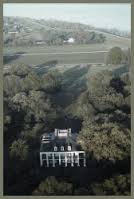
Jacques T. Roman had a stately mansion on this southeast Louisiana sugarcane plantation built between 1837-39, using all slave labor. This mansion is a beautiful example of Greek Revival architecture.

Oak Alley
Click to enlarge 
Oak Alley is known for its almost 300-year-old 28 oak trees that evenly line the entrance to the home. This home and its surrounding grounds are a National Historic Landmark.

Today this plantation is a popular destination for both American and European tourists. It is one of the few plantation homes in Vacherie in St. James Parish that has been restored to its original splendor.

It is also known to be haunted.

Some attribute this ghostly activity to Jacques and Celina Roman’s first daughter, Louise Josephine Roman. She became the caregiver for her mother for many years after her father died.

Louise never married. When a drunken sailor visited the mansion unannounced, Louise, a young woman at the time, was home alone. She was forced to attend him. This sailor tried to kiss her at which point Louisa fled. In her hasty retreat, she tripped over her iron-framed hoop skirt.

Her leg was severely cut and later gangrene set in. Her leg had to be amputated. Louise then became a nun.
Widow's Walk
on roof.
An apparition that has been spotted by many is seen on the mansion’s widow walk on the roof—where the Roman women watched boats return from New Orleans. This ghost is believed to be Jacques’ wife, Celine.

The Oak Alley web site has a page devoted to the ghostly sightings that have occurred at this plantation. Several staff and visitors have noticed mysterious activity over the years.

The plantations assistant house manager, Denise Becnel was leaving the plantation one evening with her daughter and two tour guides, Connie Donadieu, and Billie Jo Bourgeois when they noticed a light on in the Lavender room.

Lavender Room
Mrs. Stewart at the plantation.
They were surprised for they had checked to make sure all the lights were out. As they looked up at this window, they spotted a figure of a woman. She looked like Mrs. Stewart, who was the last resident of the mansion.

The lights blinked, and they all rushed to their cars. Looking back, Becnel saw all the windows were now dark.

A maintenance worker, Mitchell Boone had his arm touched when he was the only one in the mansion, and an office assistant, Louise Boone found items mysteriously moved.

Another tour guide, Juliette Temple saw a female figure sitting on one bed in the Lavender room, and on another occasion she saw the apparition of a man wearing dark clothing and boots fade away in the kitchen area.


Witnesses over the years, including tour guides Helen Dumas and Theresa Harrison, have heard the sounds of a horse-drawn carriage traveling up the plantation’s graveled road. These two guides had also seen dust billow in this area when they heard this carriage.

Yet another tour guide, Peggy Rodrigue has heard this carriage as well as a baby crying in the mansion.

Thirty-five Grey Line bus passengers while touring the home saw a candlestick fly across the room.

Oak Alley after the Civil War, like many southern plantations, fell into disrepair. A series of owners tried to restore it but failed.

Slave quarters at Oak Alley
In the mid-1920s a couple, Mr. and Mrs. Stewart succeeded in restoring the mansion and its' surrounding buildings, slave quarters, etc. to their former condition.


When Mrs. Stewart died in 1972 she endowed the plantation as a non-profit to maintain the home and the 25 surrounding acres. Tours are offered year-round.

Wednesday, March 13, 2013

Clarksville’s Haunted Widow’s Walk


The Smith-Trahern Mansion stands on a bluff overlooking the Cumberland River in Clarksville, Tennessee. 

A wealthy merchant Christopher “Kit” Smith built this home in 1858. Kit wanted to provide his lovely young bride, Lucy Dabney Smith with all the most up to date conveniences. He had Adolphus Heiman design his home. 

It reflects the Greek and Italinata styles popular at the time. Besides the home’s grand hallways and exquisite curved staircase Kit also had indoor plumbing installed. The house became known as the “ Queen of the Cumberland”. This mansion today, fully restored to its original splendor is a house museum and is haunted by one specific ghost.

Kit Smith was one of the leading tobacco merchants in Montgomery and Robertson counties. Farmers would haul their cured tobacco to Clarksville where Kit would buy their crops. Smith would then ship these fired leaves downstream by paddlewheel steamboats. 

Lucy was upset to find her new husband often had to travel. Kit always in search of the best price for his tobacco would spend weeks in Memphis, Natchez and New Orleans. His young bride pined for him during these absences.

Kit had a Widow’s Walk or wooden walkway built atop the front of mansion in order to satisfy one of his bride’s whims. Lucy had proclaimed to him that she must be the first to see the boat that returned him to Clarksville and her. 

Widow’s Walks are a rare sight in the South. They are much more common in New England where the wives of seafaring captains often stood and waited to catch a glimpse of their husbands' ships return from long voyages. They are called Widow’s Walks because the sea often claimed these captain’s lives. 

When Lucy received word of Kit’s impending return she would run up the steps to her Widow’s Walk. She was often seen wearing pretty white frocks standing atop the mansion anxiously waiting to greet her husband.

Typical Widow's Walk

Life was comfortable for the couple despite Kit’s long absences but then the Civil War broke out. The normal river trade routes that Kit used to ship his tobacco were interrupted. Boats were raided and even commandeered. Kits’ tobacco was stolen or destroyed by both sides—the Union and the Confederacy. His profits disappeared putting a strain on his finances. 

In 1863 after the Union took control of Vicksburg and Port Hudson, Smith a businessman first without sympathy for either side knew that this meant the Mississippi, Ohio and Cumberland rivers would be once again open. Trade now could resume solving some of his financial woes.

In 1865 at the end of the war Kit decided to travel to New Orleans in order to expand his trade. Securing papers from the Federalists for passage he bid Lucy a sweet farewell and headed downstream on a packet boat. 

His story at this point becomes blurred because history didn’t record for sure what happened next. Kit never saw Lucy again for he died during this trip. Locals reported seeing Lucy almost constantly on her Widow’s Walk during this time—Kit’s return weeks overdue.

Some speculate that he contracted Yellow Fever while in New Orleans and died within days. Other stories claim that he was in a hurry to return home so he booked a passage on an over crowded steamboat. It is stated that the extra weight and the captain’s need to travel quickly caused the boat’s three boilers to explode violently just north of Memphis. Many on board were killed, including Kit.

Lucy hearing the news of Kit’s death was inconsolable with grief. She was seen slowly walking back and forth on her Widow’s Walk. In mourning, she was now clothed all in black. 

Lucy lived at the mansion for the next thirty-seven years until her death in 1905. She never remarried. It is stated that daily, weather permitting she would spend time on the wooden walkway atop the mansion. In honor of Kit she wore mourning black for the rest of her life.

Soon after her death people in Clarksville started to report seeing Lucy’s ghost on the mansions’ Widow’s Walk—dressed always in black. In 1919 a man by the name of Joseph Trahern bought and partially refurbished the mansion. 

Locals continued to see Lucy’s ghost over the years. She was often described as a solitary dark figure that would stand quietly gazing into the horizon. At other times she was seen pacing back and forth.

By 1988 the mansion now fully restored was placed on the National Register of Historic Places. The home is open for tours and is used for special events, such as, weddings. The mansion still displays many of Lucy Dabney Smith’s furnishings. 

Volunteers state that Lucy’s presence is evident inside the mansion as well. Often, when they have come into work they find items that belonged to Lucy, furniture or knick-knacks, out of place. These volunteers joke that it is just Lucy redecorating again.

Today, a dark shadow is seen on the mansions’ roof at night. It is stated that this is Lucy still waiting for her beloved Kit.