Showing posts with label Japan. Show all posts

Tuesday, March 29, 2016

Spirits in Restrooms

In Japan, just in the last 70 years folklore about spirits that lurk in girl’s school restrooms have become popular.

These spirits are said to haunt specific stalls in these school restrooms.

These stories became so widespread across Japan twenty years ago—teachers across the country had little girl’s refusing to use the toilets at school.

This situation was eased when a policy was set forth that all young girls should go to the restrooms with a partner—so they were not alone.

One of the most widespread tales is about a female spirit called Hanako-san. It is said this young spirit haunts 3rd-floor school restrooms. She is seen in the 3rd stall.

Hanako-san.
Children were told if they don’t see this spirit all they had to do is knock 3 times—many stories state this spirit is a demon—and call her name. Then Hanako-san would appear once they open the stall door.

Some stories state she is a little girl that wears a red skirt. Various regions of Japan describe her differently. One story states she has a bloody hand that she uses to grab her victims with. Another states this spirit is a lizard that devours its victims.

In tamer versions, this spirit just wants a friend—but in most, it is stated Hanako-san drags her victims to hell through the toilet in this stall.

The origin of this tale began during World War ll. It is said Hanako-san was a young schoolgirl who while using the toilet was killed when a bomb was dropped on her school. It is said she has been trapped in schools ever since.

Kashima Reiko
A second spirit, said to haunt girl’s restrooms in schools is called, Kashima Reiko. This spirit was cut in half by a train. Her disfigured spirit has haunted school restrooms since.

It is said as female students enter the stall where she lurks, she asks them where her legs are. If she is not satisfied by their answer—which I imagine is never—she rips their legs off.

Yet a third spirit that is said to haunt school restrooms is a male entity. This spirit is called Aoi Manto or just Manto.
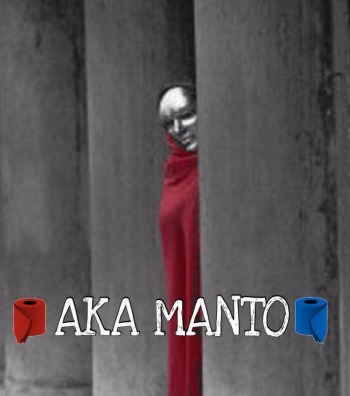

It is said he lurks in the last stall. This spirit also asks his female victims a question. Do you want red or blue paper?

If the young student says “red” he then slashes their neck and back with a blade—killing them. If they respond “blue” he kills them by hanging.


One can understand why young female students in Japan are scared to use their school toilets.

Wednesday, May 27, 2015

A Haunted Samurai Head and Ancient Curse, Part ll

Taira no Masakado was a ruthless samurai warrior in Japan in the 10th century. His acquisition of several provinces and power threatened the emperor who placed a bounty on his head.

Masakado dressed
for battle.
He was finally defeated and beheaded. His head was brought to Kyoto the seat of power at that time and placed on display as a warning that no one was allowed to oppose the emperor.

Shortly after his death, Masakado’s head seemed to be possessed by his spirit and started to act strangely. If angered this vengeful spirit caused great suffering. This story is shared in Part l of this post.

For centuries it was believed if Masakado's spirit was displeased he would curse the living. In 1874, Emperor Meji had his head moved from a shrine that honored him as a deity to a less prestigious shrine.

His vicious spirit had been dormant for centuries but with this move he awakened once more.

The Great Kanto Earthquake struck Tokyo in 1923. It laid waste to the region with its tremors and ensuring fires. Many believed this disaster was the result of Masakado’s head being moved. This quake destroyed the Ministry of Finance building. 

A decision was made to build a temporary ministry building atop the mound were Masakado’s head was now buried. This proved to be an unfortunate choice.

Several employees including the Finance Minister, Seiji Hayami died untimely deaths under suspicious circumstances. Many other employees that worked in this new building fell mysteriously ill or suffered freak accidents while at work.


When his grave is disturbed
he becomes angry and curse's people.
Most believed Masakado had cursed the building. With so many accidents and deaths occurring the ministry in 1928 decided to remove the building. They then began to hold an annual purification ritual to calm down the furious samurai ghost.

At the onset of World War ll Masakado’s spirit was neglected and in 1940 he became active again.

Exactly 1,000 years after Masakado’s death a bolt of lightning struck the new Ministry of Finance building near the grave. It was destroyed along with several other government structures.

After this, the ministry placed a stone monument with great fanfare in order to honor the fallen samurai Taira no Masakado. They then relocated their offices to a new location.

This new monument stands in Tokyo’s Otemachi district to this day.

Before this monument was built, just after the war ended in 1945 the American occupying forces had their own encounter with this angry ghost.

They held control of the land where the fallen samurai’s grave was located. The Americans started to level the area to make space for military vehicles. Immediately, weird accidents began to plague the project.

A bulldozer that was set to raze Masakado’s stone monument inexplicably flipped over killing the driver. Local officials explained to the US military the historical significance of the site and requested they halt their construction.

The Americans left the parking lot unfinished and eventually cancelled the project. The land was turned over to the Japanese government in 1961. For a while the samurai’s spirit seemed to be at peace--that is until the area underwent a new development in the late 1960s.

Again, a series of freak accidents and illnesses plagued the workers as well as reports of a mysterious shadow figure appearing in photographs near the site.

Once more the locals started to perform monthly purification rituals in order to restrain this restless spirit.

In 1984, as mentioned above Taira no Masakado’s spirit was officially reinstated to deity statue when his remains were placed under the new monument at Otemachi, Tokyo.


Masakado's tomb at Otemachi.
Masakado’s curse has lasted well into the 20th century with a series of disasters being blamed on this samurai’s spirit.

Recent connections involve production companies that plan to make films about Masakado. These crews and actors have experienced a variety of setbacks including accidents and illnesses.

Because of this it is now customary for film and TV production companies to first conduct purification rituals and pay their respects to the dead samurai’s grave in order to appease his spirit.

Today, a bustling financial district, skyscrapers and an Imperial Palace surround Masakado’s monument. It is located on prime real estate in Tokyo. But the plot of land where Masakado’s skull lies remains untouched.

Nearby businesses continue to hold purification rituals to calm Masakado’s spirit. Every May a festival is held to honor this samurai.

It is widely believed to be bad luck to turn one’s back on the shrine or to face it head on.

So is the belief in Masakado’s haunting and curse just a superstition or does this angry spirit exist? Many who live in Tokyo would answer this question with a resounding “yes.” They believe this evil spirit from the past is still a threat.

In Part l of A Haunted Samurai Head and Ancient Curse information is shared about Masakado’s haunting.

A Haunted Samurai Head and Ancient Curse, Part l

Today Tokyo, Japan is a proud center for science and technology but this modern city was once the site where vicious feudal conflicts resulted in bloodshed.

Taira no Masakado's tomb.
Surrounded by modern skyscrapers and an Imperial Palace sits a small shrine in Otemachi Tokyo that even today the locals fear.

Masakado
This shrine contains the head of Taira no Masakado a powerful and rebellious samurai who made a name for himself in the 10th century Heian period.

This samurai’s legacy has resulted in one of the most bizarre and creepy hauntings in Tokyo.

Born into privilege between 800 and 900 AD Masakado was descended from Emperor Kanmu. After his father died, Masakado’s uncles tried to steal part of his land--they plotted to ambush and kill Masakado.

But Masakado proved to be a formable foe. He single-handedly defeated their attempt sending them into a hasty retreat.

Masakodo’s revenge was swift and merciless. He descended on his relatives’ lands, burning and demolishing everything in his path. He and his warriors brutally killed thousands.

The families dispute was brought before Emperor Suzaku, but Masakado actions were deemed just, and he was pardoned.

The family dispute continued. Masakado’s father-in-law and cousin attacked him. He again prevailed driving his enemies back. Wanting revenge, he raised a force to invade their lands in Hitachi province.

Masakado ended up acquiring eight different provinces.

This time the nobles condemned his actions, but Masakado was now powerful. He treated the peasants under his rule justly, and they viewed him as their savior. He also was considered a fierce and skilled warrior who could not be defeated.

Gaining even more power, Masakado boldly proclaimed himself the new Emperor of Japan, the real emperor in Kyoto did not agree. He declared Masakado a rebel and traitor and a hefty bounty was placed on the samurai’s head.

Fujiwara no Hidesato
A large force in 940 AD, which included many of Masakado’s own relatives and his closest ally, Fujiwara no Hidesato marched to the Kanto region to bring back the head of the rogue samurai.

Masakado’s forces fought valiantly but they were outnumbered 10 to 1 and fell before the onslaught. Masakado was killed when an arrow pierced his skull.

His enemies removed his head from his body and sent it to Kyoto so it could be displayed as a warning to anyone who dared to oppose the emperor.

Once the head was displayed, a strange phenomenon was noted. The head did not decompose or draw flies even after months. Its expression did change-the head’s eyes looked fiercer with each passing day.

The head then started to speak. Every night its disembodied voice would call out, often screaming for someone to bring its body so it could continue to fight.

Then it began to take on an eerie glow and started to float through the air. One night it took off and landed screeching in a fishing village called Shibazaki near the samurai’s home. The locals cleaned it and buried it. Eventually, a shrine was built atop the grave.

Strange phenomenon continued to occur at this site. Tremors shook the area, and an inexplicable light flashed around the grave. The villagers began to see the ghost of a faceless samurai wandering around the area.

The frightened villagers prayed the spirit would rest--they placed a monument and headstone to honor the fallen samurai. For a time everything settled down but then a Tendai Buddhist temple was built nearby, and the dormant spirit of Masakado awoke once more.

It appears this temple angered him for a series of natural disasters, disease and accidents started to plague the area. By the early 1300s a terrible plague hit which caused many deaths. These tragedies were all attributed to Masakado’s vengeful spirit.

To appease his spiteful spirit and end the suffering a ritual was performed, and his head was moved to a more prestigious shrine in hopes he would calm down.

This worked for several centuries then in 1874, Emperor Meiji visited the shrine. He deemed it unacceptable that an enemy of the Imperial family should be revered--so Masakado’s deity status was revoked. His head was moved to a less prestigious shrine.

Masakado’s vengeful spirit was awakened once more.

In Part ll of A Haunted Samurai Head and Ancient Curse, the Samurai's spirit continues to wreak havoc on the unfortunate humans that disturb his grave.

Sunday, July 13, 2014

Japan: Kosodate Yurei


A while back I shared a traditional California ghost story entitled, Milk Bottles. The reader can find it here.

Kosodate
Yurei
The Japanese have shared this story for centuries. Even though the story of the Kosodate yurei is a very old ghost story several modern versions of it are still shared with children in Japan today.

Japanese ghosts are known as Yurei. These ghosts are both feared and honored. Most Yurei stories were originally shared during the Edo period (1603-1868).

Kosodate yurei means “child-raising” ghost. 

In the American version of this story the ghost of a frontier mother comes in search of “milk bottles” to keep her baby alive that was mistakenly buried with her.

In most modern Japanese versions of this story unlike the American one this mother brings her child with her.

Sweet Sake

Today Tsukiji is a popular fish market in Tokyo. At one time this area was also used for several temples and cemeteries.

Amazake--Sweet Sake
A dealer in this original market became curious when a woman approached his stall every night clutching her baby to her and purchased amazake--this is sweet sake given to children.

One night as he watched this woman give the sake to her baby he decided to follow her.

He watched her as she went into the main hall of one temple and then she simply vanished. Gathering his wits he then hears a baby’s cry and follows the sound to a nearby cemetery.

There he traces the crying to a freshly dug grave. He then unearths this grave. He finds in the coffin the mother’s corpse, in her arms she is still holding the baby tightly.

Similarities and Differences

This Japanese legend and the American one that evolved from it have several similarities but there are also several major differences.

Like mentioned above the Japanese version has the mother bring her baby with her--in the American one she leaves the child behind.

In the Japanese version the Kosodate is in search of sharing the “pleasures” of life with her child--in this version sweet sake--in other Japanese versions little toys, candy etc.


In contrast, the American version has the mother searching for nourishment for her child--in order to keep her baby alive.

Another difference is in the Japanese version the mother appears to want to keep her baby with her *--whereas in the American version she wants someone to find and then rescue her baby.

* This makes this version scarier in my eyes.

The Story of Monchikae Onna

The Japanese legend of the Kosodate yurei originated from a Chinese story that can be traced back to the late 1100s.

The story of Monchikae Onna is about a woman who buys rice-cakes.

In this tragic legend a woman who is pregnant dies and then is buried. Soon afterwards a rice-cake dealer begins to see a strange woman carrying a baby come to his stall.

Rice cakes
She feeds the rice-cakes she buys to her baby.

The dealer wonders about this odd woman who buys his cakes regularly so one night he carefully ties a red string to the woman without her notice.

When she leaves he follows this string. It leads him to a grave hidden among some bushes.

He alerts the still grieving relatives of the woman and they dig up her grave. They find she had given birth posthumously in her coffin.

They take the child to raise as their own and then they cremate the mother’s body.

Again, in this version the yurei appears to want to keep the baby but because of the rice-cake seller’s intervention the child is saved.

Saturday, March 1, 2014

Japan’s 100 Scary Ghost Stories


Japan’s ancient history, rich culture and heritage are spun with death superstitions and ghost stories.

Here are just a few of these traditional superstitions that are connected to death.

The Japanese believe people should “cleanse” themselves after attending a funeral. They do this by throwing salt over their body.

They believe one should never cut their fingernails at night for this brings bad luck or a “haunting” to this person.

They also believe certain numbers should not be referred to--the reason for this is the number 4 is the homonym for death and the number 9 is the homonym for suffering within their culture. An example of this is when they state, “Don’t buy four of those. Don’t give four of these.”


People in Japan share a variety of ghost stories, ghost myths, and legends. The following game evolved from traditional Japanese supernatural beliefs and the fact so many ghost stories are retold.

The “100 ghost story game” which is known as Hyakumonogatari Kaidankai first was played during the Edo period, 1603-1868.

Here is how it is played:

At night, the host of the party lights 100 candles. Players sit on the floor in a circle with the ring of candles in front of them.


Each player takes turns telling a Kadan, their word for a ghost story, and then they extinguish one of the candles in front of them. As the night goes on and each story is told, the room grows slowly darker. 

The result is these stories become scarier --at least to the listener who is now sitting in a dark room.

Many Japanese feel as the last candle is extinguished during this game it represents the conclusion of a spiritual evocation, which summons spirits or ghosts. Which tops off the evening with an added scare.

In one earlier form of this game samurai warriors played it to test their courage.

Monday, February 24, 2014

Japan’s Tsunami Ghosts


An article written this month recounts several stories about recent encounters the Japanese have had with ghosts that they feel were victims of the terrible 2011 earthquake and tsunami that hit Japan. This disaster killed 20,000 people.

One Zen temple priest from the northern part of Japan, Reverend Kaneda states he has had to exorcise several people who have been invaded or possessed by the spirits of tsunami victims. He also shares several ghost stories that he has been told.

Skeptics point to the fact that many Japanese still practice the unspoken religion of traditional “cult” ancestor worship. They still keep memorial tablets for the dead--the ihai, which they consider to be alive in some way. So these skeptics feel these recent stories are a result of these antiquated beliefs.

Regardless whether they are believed or not they are very disturbing and scary.

Here are a few stories Reverend Kandea shared with one writer, Neal Colgrass, Bizarre Tsunami Ghost Stories Haunt Japan, published on newser.com.

A fire station located in Tagajo kept receiving calls to places that were demolished by the tsunami. These only stopped when these firefighters prayed for the spirits of the people who had died.

A Sendai cab driver picked up a sad-looking lady. She requested to be taken to an address that was swept away in the floods the tsunami caused. When the cab driver looked in his rear view mirror his passenger was gone. But out of respect he drove to the area near this address and opened the door for the ghost.

Another man, a builder by trade in comparison showed little respect as he stood eating an ice-cream cone near one tsunami site with his wife and mother. His wife described his terrifying behavior after this. He jumped around on all fours and licked the furniture. He bellowed loudly and kept repeating, “everyone will die.” 

The Reverend Kaneda performed an exorcism to get rid of this resentful spirit. This saved this builder's marriage because his wife was threatening to divorce him. This man stated he had no memory of his behavior while possessed. **

The Reverend also exorcised one woman who was possessed by 25 separate spirits that had entered one after another. One of these spirits stated he was a father trying to find his daughter after the quake struck. He stated that he and other bodies were all trapped at the bottom of the sea.

As stated above many skeptics discount these stories. In contrast, one has to wonder why people would question the possibility of hauntings after such a devastating disaster.

Before and after satellite photo.

One book publisher, Richard Lloyd Parry--who is a skeptic; arranged for several gatherings at Japanese community centers where readings of ghosts stories were shared. People were encouraged to share their own stories as a form of therapy or healing.


** In an essay Parry wrote for the London Review of Books he shares how Reverend Kaneda performed his exorcism on the builder who was named Ono.

Kaneda beat the temple drum as he chanted the Heart Sutra:
“There are no eyes, no ears, no nose, no tongue,
 no body, mind; no colour, sound, or smell;
 no taste, no touch, no thing; no realm of sight,
 no realm of thoughts; no ignorance, no end 
to ignorance; no old age and no death; 
no end to age and death; no suffering, 
nor any cause of suffering, nor end 
to suffering, no path, no wisdom and no fulfillment.”
Ono’s wife told him that he pressed his hands together in prayer as the priest’s recitation continued, she saw him raise his arms high above his head as if being pulled from above. The reverend then splashed him with holy water. Ono suddenly returned to his senses and found his hair and shirt covered in water. He stated he was filled with a sensation of tranquility and release.