Showing posts with label Lincoln. Show all posts

Thursday, January 8, 2015

Tippecanoe: The 20-Year Curse

This curse is known as The Tippecanoe or Tecumseh Curse. It is one of the enduring legends connected to American history.

Chief Tecumseh
It started with William Henry Harrison who was a Major General in the U.S. Army. While he was Territorial Governor of Indiana Harrison faced off with a Shawnee Native American, named Tecumseh in the Battle of Tippecanoe.

Tecumseh, the leader of the Shawnee tried in the early part of the 1800s to form a Confederation of Tribes to resist the white settlers.

During the Battle of Tippecanoe in 1811, Harrison managed to hold off a surprise attack from Tecumseh’s half-brother, Tenskwatawa--known by the Shawnee as The Prophet.

Battle of Tippecanoe

Harrison considered this battle to be “a decisive victory.” Afterwards he gained the nickname, “Old Tippecanoe.”

Two years later, Harrison once more fought Tecumseh, an ally of the British, during the War of 1812. During the Battle of Thames Tecumseh was slain and Harrison once more claimed victory.

Harrison was elected president of the United States in 1840.

William Henry Harrison

 The Legendary Curse

The story states The Prophet, bitter and seeking revenge for his half-brother’s death placed a curse upon Harrison and future “Great Chiefs” of the U.S. in 1840.

Shawnee Prophet
Tenskwatawa
In a politically incorrect statement by today’s standards, a 1931 edition of Ripley’s Believe It or Not, printed their version of Tenskwatawa’s curse:

“Harrison will win next year to be the Great Chief. He will die in his office. I, who caused the sun to darken * and Red Men to give up firewater **, tell you Harrrison will die. And after him, every Great Chief chosen every 20 years thereafter will die. And when each one dies, let everyone remember the death of our people.”

* “Sun to darken” refers to an eclipse that The Prophet accurately predicted.

** One of The Prophet's teachings was that Native Americans should give up “firewater” or alcohol.

Real or Coincidence

According to the Library of Congress there is not any real evidence that The Prophet actually placed a curse on Harrison. But what happened next--every 20 years--is eerie to say the least.

William Henry Harrison used his nickname, Tippecanoe in a campaign slogan while running for president--Tippecanoe and Tyler Too. Tyler was his running mate.

Harrison became the 9th president of the United States in 1840. But he was only in office for 30 days before he became ill and died of Pneumonia.

Abraham Lincoln
In 1860--20 years later--Abraham Lincoln was elected president. He was assassinated shortly after being re-elected in 1864.

In 1880--20 years later--James Garfield was elected president. After serving 200 days in office he was assassinated as well.

James Garfield

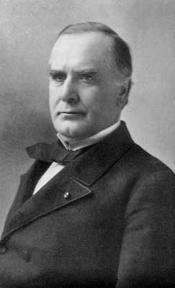
William McKinley
In 1896, William McKinley was elected president. Then in 1900 he was re-elected--this made it 20 years later. He was also assassinated while in office.

In 1920--20 years later--Warren G. Harding was elected president. He died of either a heart attack or stroke while still in office.

Warren G. Harding

Franklin D. Roosevelt
Franklin D. Roosevelt was elected to an unprecedented four terms: 1932, 1936, 1940--20 years later--and 1944. He died while in office of a Cerebral Hemorrhage.

In 1960--20 years later-- John F. Kennedy was elected. He was assassinated while in office.

John F. Kennedy


Jimmy Carter
Jimmy Carter when he ran for re-election in 1980 was asked about this curse at a campaign stop, he stated that he was not afraid--what will be, will be. He lost his bid for re-election.

In 1980--20 years later--Ronald Reagan, Carter’s opponent was elected president. He was shot in an assassination attempt but survived.

Ronald Reagan

Some feel the curse was lifted at this point but when George W. Bush was elected president in 2000--20 years later--an assassination attempt was made against him in 2005 while he held office.
George W. Bush
Did this curse ever really exist? Or were these stories just a coincidence? Since most legends have grains of truth--one has to wonder.

Wednesday, October 8, 2014

Nebraska: Haunted Locker Room


The following ghost encounter took place in Lincoln, Nebraska, at East High School.

Cayenne, while in elementary school, was on her school’s swim team. Her team used the swimming pool at East High School, for their workouts.

During one afternoon practice, Cayenne had to leave the pool early, for her mother was picking her up for a dental appointment.

She stood under the warm shower spray rinsing the chlorine from her back. She tried not to think about the fact she was in the locker room alone.

Just the week before, she had left the pool to use the restroom, and while in this locker room, she had felt an unnatural chill. Then as she headed back to the pool, she heard a strange sound.

Once back in the pool, she realized the sound she heard was another person’s breathing. She was sure she had been the only person in the room, so this realization scared her.

Being alone in the locker room, once more, Cayenne just wanted to dress and leave the room. Before she could finish rinsing her hair, the shower spray turned off. She turned the tap back and forth, but the water did not come back on.

Shivering and cold she hurried to her locker, but just as she reached it, the shower turned back on. Shaking off a feeling of unease, she went back to turn the water off.

As she turned, she heard a locker door slam shut. Then several more slammed shut. As the water from her wet hair dripped into her eyes, she heard yet another locker open.

Someone must have come into the room. She heard several more lockers open and then shut loudly. She called out, “Hello?” 

No one replied. Cayenne realized she was alone in the room. She quickly headed back to her locker. As she dried off and dressed, she glanced up at the wall clock. She then remembered it was broken--it always read 12:12.

As she looked at the clock, the second hand started to move. Now in a panic, she struggled to stuff her wet suit and towel into her bag. On the wall above her head, the PA speaker crackled with static, but no voice came on.

She put her feet into her shoes and didn’t stop to lace them up. She grabbed her gym bag and started to shut her locker door with her shoulder, but something drew it away from her and closed it gently.


As she moved toward the door, the room felt different. It was if the air around her became thicker. By this time, she was running. As she passed the mirrors above the sinks, she spotted a reflection of another girl in one mirror.

She had her hand in the air like she was waving goodbye to Cayenne.

Cayenne is not the only witness that has seen this ghost. Several witnesses have seen the reflection of this girl and heard the locker doors slamming shut.

In 2012, late one afternoon, a female custodian locked the doors and was working when the lights went off in the locker room. She made her way to the switch and realized it had been turned off--she was alone, and the doors were locked.

Other employees at the school have had locker doors swing open in front of them as they pass, and heard someone breathing behind them.

One custodian that quit, broke his leg while in this locker room--when asked what happened all he would share was that the ghost had caused it.


Excerpts from A Guide To The Ghosts Of Lincoln, by Alan Boye.

Wednesday, April 3, 2013

Haunted Ford’s Theatre


On the night of April 14, 1865, John Wilkes Booth, an actor by trade, entered the state box at Ford’s Theatre in Washington D.C. and shot Abraham Lincoln in the head. 
Booth shooting Lincoln.

He then vaulted over the railing and jumped down to the stage. Even though he broke his leg as he did this, he managed to escape through the theatre’s back alley--known as Baptists' Alley. While still in the theatre he yelled out, “Sic semper tyrannis” (thus ever to tyrants). 

Just five days before this, General Lee of the Confederate army had surrendered in Virginia ending the American Civil War.

Abraham Lincoln, the 16th president of the United States, had accompanied his wife, Mary Todd Lincoln that night to see a play, “Our American Cousin.” 

When Booth, a Confederate sympathizer shot Lincoln, Mary Todd screamed and pointed toward the stage. Other screams of “murder” rang out throughout the theatre. 

Lincoln was rushed across the street to what was then Petersen’s Boarding House and placed upon a bed. He died the following morning at 7:22. He never regained consciousness.

Twelve days after Booth killed Lincoln, he was found hiding in Richard Garrett’s barn in Bowling Green, Virginia. 

After riding and searching for 24  hours, the soldiers of the 16th New York Calvary surrounded the barn, set it on fire and started to shoot. 

When Booth’s body was dragged from the collapsed barn, he was so severely burned, it could not be determined if he died from the fire or from a gunshot wound. In fact, the body could not be positively identified. 

Booth’s eight co-conspirators were found later. Some were hanged, one unjustly, * others were given prison sentences only to die in prison or were pardoned, one was never convicted. **


Abraham Lincoln was the first American president to be assassinated. After he was shot, Ford’s Theatre was immediately shut down. 

The United States government purchased the building and used it for storage, an Army Medical Museum, and then as a library for the Surgeon General’s office. By 1887 it was being used by the War Department as a clerk’s office. 

In June of 1893, another tragedy struck the building. It’s three upper floors collapsed, killing twenty-two clerks, and injuring another 100 government employees.


After this accident, rumors started to circulate that the building was cursed. So it once again was used just for government storage. After 193l, it sat unused. 

Then in 1964, the U.S. Congress approved its restoration. In 1968, the building once again opened its doors as a theatre.

Its basement was converted into a museum in honor of Abraham Lincoln. This museum contains artifacts from the Lincoln Assassination, including the derringer Booth used to shoot Lincoln, and the coat Lincoln wore to the performance. 

This theatre, along with the Petersen House across the street, is now preserved as a National Historic Site.


According to numerous witnesses, the building’s tragic events in 1865, still play out even today. People report hearing disembodied footsteps rushing into the state box, followed by a loud gunshot and screams. 

The ghost of Mary Todd has been seen leaning over Box 7’s railing and pointing toward the stage. Some have heard her cry out, “He has killed the president.”


John Wilkes Booth is believed to haunt the stage area at Ford’s Theatre. According to many actors, who have worked in productions at the theatre, one particular spot on the stage located at center-left is always icy cold.

In fact, several of these witnesses state that when they try to deliver their lines from this spot, they became ill, even nauseous, or they began to shake violently. 

Others have seen Booth’s ghost, running across the stage just as he did the night he assassinated Lincoln.


Some state Lincoln haunts Ford’s Theatre, but his apparition is seen more often at the Petersen House across the street where he died. His ghost is also seen at the White House. I talk about this in another post here. 

Before Ford’s Theatre closed in 2007, for major renovations, I took groups of around 100 teenage students over several Spring Breaks to tour Washington D.C., Ford’s Theatre was always one of our stops. 

We always ended up in the basement in the long lines waiting for the single stall restrooms.

Every time I was in this area, I really got some intense, creepy feelings. I have always wondered if some of the items in the basement museum are haunted. 

Each time I have been in this area since 2009, to attend plays, etc. I get the same overwhelming feelings. So when I was doing research for this post, I was surprised to find no one else has experienced these same feelings or mentioned this area of the theatre as being haunted.

* I wrote another post about Mary Surratt, and why I do not feel she was one of Booth’s co-conspirators.

** John Surratt, Mary’s younger son was also considered a co-conspirator, but he was the one who was never convicted.

Wednesday, June 15, 2011

The Ghost of Mary Surratt

Mary Surratt was the first woman to be executed by the American Federal government. She was hanged on July 7, 1865 accused of participating in a plot to assassinate President Abraham Lincoln. Mary went to her grave proclaiming her innocence.

Mary just like most women of the time dreamed of a good life with a husband and children. She was a devout catholic. When she married John Surratt in 1840 she requested he convert to Roman Catholicism. 

They and their three children lived in Maryland. John had inherited land and money from his family but he and his wife were not happy. Mary discovered her husband’s unfaithfulness when another woman charged him with a paternity suit. After this things went from bad to worse in their marriage.

Not liking his wife’s religious ways John drank more and more and he often failed to pay his debts. As time went by his temper became more volatile. 

He built a tavern and inn on 200 acres that became known as Surrattsville—today it is Clinton, Maryland. Like many wealthy families of the time the Surratts owned slaves. John became postmaster and Mary was active in the local church fund.

Lonely and at her wits end Mary formed a close bond with the local priest. It was rumored they were having an affair and the priest was sent away. Mary continued to correspond with him. 

John bitter about Mary’s attachment to him cruelly suggested she should also service the customers that stayed at their inn. John’s debts continued to mount and his drinking worsened.

John Jr.
When the Civil war began in 1861, Maryland a border state remained apart of the Union—the northern side. But Mary and John were southern sympathizers so their tavern and inn became a safe house for fellow sympathizers and Confederate spies. 

John Jr. their youngest son became a courier for the Confederates moving messages, cash and contraband back and forth across enemy lines. Their oldest son Isaac moved to Texas and enlisted in the Confederate army.

Townhouse on H Street
Mary’s husband died in 1862 from a stroke. He left the family in serious financial difficulty. Both John Jr. and Ann, their daughter, moved in to help Mary with the farm and business. 

John Jr. was appointed postmaster of Surrattsville but he was dismissed in 1863 for disloyalty to the Union. 

In the fall of 1864 Mary weary of running the farm and business, compounded with the fact that several of their slaves had run off decided to move her family to a townhouse her husband had purchased years before, on H Street in Washington D.C. Mary took in boarders, and the townhouse quickly became a center for John Jr’s covert activities.

It was here Mary met John Wilkes Booth. He was handsome, a successful actor, and charming. Mary was flattered by the attentions he paid her. Booth a natural leader and master manipulator quickly viewed the Surratt family as a means to an end. He emotionally seduced Mary, a much older woman than himself, and gained the trust of John Jr.

Booth drew John Jr. deeper into his conspiracies and he arranged to have John Jr. store two guns and a box of cartridges at the families’ Surrattsville Inn. Mary was not informed about these guns. 

On April 14, 1865, the day Booth shot and killed Lincoln Mary naively made a short trip to Surrattsville to collect overdo rent from her tenet John Lloyd yet another southern sympathizer. She also delivered a wrapped package given to her by Booth. Later it was revealed this package contained Booth’s field glasses.

Booth in his escape briefly stopped at the inn in Surrattsville to collect the guns that he would need to fight off his pursuers. Booth was found and shot. John Jr. hearing of his death fled the country. 

Mary was arrested for conspiring to murder Lincoln and was tried in front of a military tribunal—without a jury. She was presumed guilty until proven innocent.

Mary at Military Tribunal
John Lloyd afraid he might be implicated pointed the finger at Mary. It was his testimony that Mary had warned him to get “the shooting irons ready” that convinced the tribunal to convict Mary. 

The irony here is Lloyd during his testimony stated he was not sure Mary had actually said this to him. 

It was also established that when Booth visited the H Street townhouse he most often requested to see John Jr. not Mary. 

Another irony is most of the evidence presented by the prosecutor was circumstantial so if she had been tried in a civilian court this evidence would have been thrown out.

Gallows
Many historians today believe Mary Surratt was not apart of the conspiracy to murder Lincoln. She just trusted the wrong man. 

In fact, when John Jr. was captured and returned to the states two years later the jury at his trial acquitted him for lack of evidence. 

Some state Mary was hanged to satisfy the Union’s need to revenge the death of a most beloved president. In her last confession to her priest she simply stated, “Father I am innocent.”

Mary’s ghost is present in two locations today. 

The inn in Surrattsville is a museum today. The director and many others have heard doors shutting and footsteps etc. without logical explanation. The other place Mary haunts is the Washington Penitentiary where she was held and tried. Today it is quarters for officers and their families—when they move in they are warned of the ghost that resides there. 

The second floor apartment where Mary’s cell was located is very active. People sense a woman at the window looking down on the tennis courts were once Mary’s gallows stood. Some hear a woman’s distress calls in the apartment. Others sense a deep disappointment and sadness in its rooms. Mary does not rest in peace.

Today the question of Mary’s guilt or innocence is still in question but many feel she did not deserve the hanging rope.