Showing posts with label Norfolk. Show all posts

Thursday, January 28, 2016

Thetford Priory

Thetford Priory as it once was.
Founded by Roger Bigold the 1st Earl of Norfolk in the 1100s this priory today is in ruins. On this site, several witnesses have seen what appears to be the ghosts of black-robed cluni monks.

In 1937, terrified witnesses heard the sounds of monks reading, chanting and singing in Latin.

In 1992, scared teenagers hanging out at this old priory heard the clinking of keys before they watched an apparition of a monk run straight past them.

However, the most famous sighting occurred in 1987. Christian Jensen-Romer and three of his friends watched through an archway as a monk descended some stairs. When they approached, the monk and the stairs they were no longer there.

Christian Jensen-Romer
This group of male teens, Jensen-Romer was 18 at the time, were driving through the town of Thetford in Norfolk on their way to a wargames meeting.

The call of nature interrupted their trip. As they looked for a loo or restroom they stumbled upon the ruins at the end of one lane. A sign informed them that they were at “Thetford Priory, a victim of Henry Vllls’ “Dissolution of the Monasteries” in the mid 16th century.

It was a warm August night around 8:30 p.m. They found a secluded spot behind a bush to relieve themselves, as they turned to leave they looked at the ruins one last time.

Archway in ruins.
All four spotted a figure that at first, they thought was playing a joke. This figure was peering at them from an upper window. Then the group saw this figure through an archway below. It was wearing a black sheet that billowed behind it as it walked down a staircase.

The group charged forward toward the figure. Jensen-Romer remembers running up a few steps only to then slam his head against the side flint wall. In the dark, the teens quickly realized there was no staircase in the archway. The dark figure had disappeared as well.

A feeling of coldness enveloped the group and two of the teens became nauseous and threw-up. As they left the priory, they eerily got the sense the stone walls were somehow rebuilding themselves around them.

Thetford Priory
As they ran to their car it felt as if the ground beneath their feet turned to wet sand and they all stated their legs became unsteady. All four afterward wrote down what they saw in the archway.

Their accounts differed in the description of the figure, but they all agreed it appeared to be a “black-robed figure that appeared to be a monk.” They also agreed that what they saw was more than just a product of their fear.

Christian Jensen-Romer who later became a writer and Parapsychologist states this experience changed how he looks at the world. He understands why people claim to see ghosts.

He is not certain what they saw that night—but all four men today state they did see something that was “real.”

In a program entitled, Ripples in Time met with these four witnesses 10 years later at the priory. Three are scientists, and one is a psychologist today. They recount what they saw in detail on this video.


Another witness to this phenomenon, Margaret and her daughter are residents of Thetford. One warm summer’s day as they sat on a bench near the ruins they saw a monk.

He had his head bent and his arms were tucked in his habit. He glided by oblivious to their presence. Margaret followed this figure around one wall only to find no one.

She admits she has never gone near the ruins since.

One pamphlet in the town tells stories of people trying to speak to this monk only to see the figure vanish in front of their eyes instead.

Several of these encounters point to the fact that this might be a Residual haunting but the four male teen’s experience seems to be more a time slip.

Monday, August 17, 2015

William and Kate’s Haunted Home


Ten bedroom Anmer Hall.

The Duke and Duchess of Cambridge’s newly remodeled home, Anmer Hall in Norfolk has a resident ghost.

This phantom is of a man who was martyred more than 400 years ago.

During Elizabethan times this home belonged to the Walpole family.

The eldest son in the family, Henry Walpole gave up his law practice and converted to Catholicism. He did this despite the fact this religion was harshly repressed by the English Crown.

Sir Henry Walpole
He studied abroad in 1590 becoming a Jesuit priest. He chanced the danger of persecution and started his journey back to England. He felt he would be able to successfully preach in Norfolk.

But fate intervened. The boat he traveled on was forced by bad weather to land in Flamborough in Yorkshire. Henry was arrested and taken to the Tower of London.

While imprisoned in the Salt Tower
Walpole carved his name in the plaster.
Photo: Richard Neveil
He endured months of torture on the rack while imprisoned at the Tower. In 1595 he was returned to York where at the age of 37, he was hung, and then drawn and quartered.

In 1970, Pope Paul Vl made him a saint.

Although he died far from Norfolk, his spirit appears to have returned home. His is seen wandering the grounds of Anmer Hall.

Witnesses have seen him in the home’s garden and it is said when the wind blows, people hear him calling.

Anmer Hall undergoing renovations.
Amner was a gift from the Queen to the royal couple. Recently it was overhauled to bring it up to date including new roof tiles, and the building of a glass-roofed garden room.

William and Kate like it so much they intend to make it their main home.

They were warned about the old hall being haunted by Sir Henry Walpole before they moved in. The couple took this in stride—for many of the royal residences are haunted.

The couple’s initial joking response to this news was, “No old home would be complete without a ghost.”

Monday, July 13, 2015

British Isles: Black Dogs


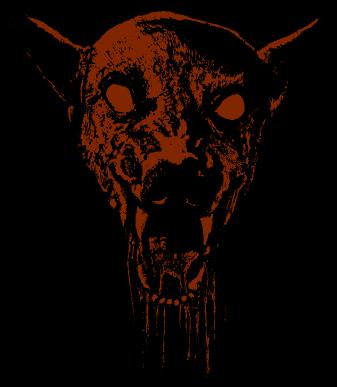
A black dog is a name given in England to ghosts that appear as large black dogs.

British folk tales describe these apparitions as larger than normal dogs that have glowing eyes and are harbingers of doom.

These ghosts are seen at night and are often associated with the Devil or Hellhounds. It is often mentioned if one witnesses this phenomenon they or a close relative will die within the year.

Black dog appearances are often related to electrical storms, crossroads or water.

Some trace the origin of these tales back to Celtic and Germanic elements in British culture.

As mentioned above black dogs are associated with death. Most stories mention these creatures are malevolent in nature.

Almost every county in England has legends that are told about black dogs. Because there are so many only one is shared here.

Black Shuck

East Anglia—Norfolk, Suffolk and parts of Essex—call their black dog, Black Shuck, Old Shuck, or simply Shuck.


Like most black dogs Shuck is malevolent in nature, this ghost is said to terrify its victims. This huge dog is said to roam the coastline and countryside of East Anglia.

The name Shuck is from an old English word that means demon.

This ghost is a harbinger of death—but in some cases it can also be more companionable.

There are many accounts of Shuck appearing in the region. These dogs are huge with flaming eyes of the color of red or green. In some tales it is stated Shuck actually has only one eye in the center of its head.

Some tales state Shuck is as large as a calf or even a horse. Others state that this dog is headless or appears shrouded in a misty cloud.

In 1901, W. A. Dutt wrote an account of one such creature.

He is in the form of a dog, and prowls along dark lanes and lonesome field footpaths. When heard its howls makes ones blood run cold. Its footfalls make no sound.

When seen it has one fiery eye. If encountered this creature will bring the worst of luck. It is said you will meet your death shortly afterwards.

The most famous report of a sighting of Black Shuck occurred at churches in Bungay and Blythburgh in Suffolk.

On August 4, 1577, at Blythburgh, Black Shuck burst through the doors of Holy Trinity Church to a clap of thunder.

He ran up the nave, past a large congregation killing a man and a boy and causing the church steeple to collapse through the roof.

As the mysterious dog left scorch marks appeared on the door. These marks can still be seen today.

Scorch marks on door.
On the same day, witnesses at St. Mary’s Church in Bungay saw a black dog running swiftly among people that were kneeling and praying.

In May of 2014, a large dog’s remains were excavated at Leiston Abbey and have been linked to Black Shuck. 

Here is a brief video about Black Shuck.