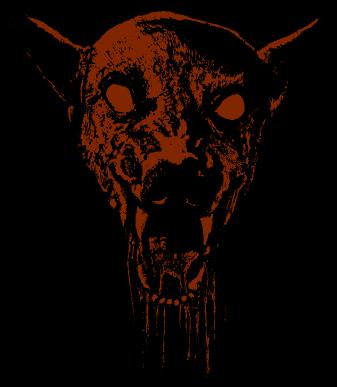
Showing posts with label demons. Show all posts

Saturday, June 1, 2019

Whistling Down Bad Omens


Various techniques to finger whistle, 1893.

In many cultures, whistling is thought to bring bad luck.

In the UK one superstition about whistling involves 7 spirits or birds. It is believed when a person hears their call –it means death or at least a great calamity.

In the 19th-century English miners would refuse to enter mines if this spectral whistling was heard.

In many Slavic cultures, including Russia and Romania, it is considered bad luck to whistle indoors.

It is believed if this done, it will bring hardship to the household via the loss of one's money—hence the phrase, “Whistling money away.”

Whistling
However, it was believed whistling outdoors was okay.

The origin of this Slavic superstition dates back to a belief that whistling was a magical way to call the wind. Sailors used this when all was quiet—so they could continue to their destinations.

So the belief was if whistling indoors brings wind—it will surely blow everything away, including any money the family possesses.

In Korea, it is believed if a person whistles in their home—it will call a snake out—or even worse a ghost. School children are warned not to whistle.

In Lithuania is it is forbidden to “whistle while you work,” for it will summon an evil demon.

Many cultures, including-- Mexicans, Turks, Arabs, Japanese, Native Hawaiians, and Canadians all hold a tradition that states it is unwise to whistle at night.

It is believed evil spirits will then haunt the whistler.


Theater production
with props.
Theater workers believe whistling is unlucky. This superstition also has its roots in sailor beliefs.

Many stage technicians had sailing experience. They were hired because of their knowledge of intricate rope systems.

Stage productions often required these ropes to be manipulated—to assist an actor to fly on stage or to move about props during a production.

There was and is a strong belief that if someone were to whistle, it could cause a worker to miss a cue, which might endanger the actors on stage. For example, a prop might fall on an actor if a cue was early or missed.

Another theater superstition involves someone whistling backstage during a production. If the audience hears this, it is believed it will bring everyone bad luck.

In ancient China, there was a superstition that advised against whistling.

Skilled practitioners of a form of yoga known as “breath yoga”-- that involves whistling—caused the summoning of evil spirits.

It was also said they could use this yoga to predict weather patterns.

One summer, I encountered a group of teen boys fishing at a small pond in southern Colorado. Without thought, I began to hum and then whistle.

One of the teens that I did not know approached me. He was noticeably mad and punched me on the arm.

This group believed that whistling would prevent the fish from biting.

Friday, August 14, 2015

Peru’s La Casa Matusita


Ghost stories are sometimes used to scare people away from a building or an area.

The casa.
La Casa Matusita has gained the reputation for being the most haunted building in Latin America.

This casa is an innocent enough looking yellow structure in Lima, Peru’s center. However many locals claim it is haunted. It sits at the intersection of Garcilaso de la Vega and Espana.

There are several tales as to why some believe this building contains tortured ghosts.

One story told often claims a Japanese-Peruvian man slaughtered his entire family at the casa and then took his own life.

Another tale states that during a formal dinner party the guests were all given a hallucinogenic, which caused them all to go mad-- they then massacred each other.

Ever since, it has been believed the second floor of the casa is haunted.

One claim even states if a person dares to enter the second floor they will go mad.

Abandoned second floor.
Supposedly, a television reporter in the 1960s entered the second floor in order to debunk these claims—but it is said he went insane shortly after.

To add to the mystique of the casa it is reported that the second floor remains vacant.

This ghost story has an unusual twist. Some state the following is the true story.

The first ghost stories told about La Casa Matusita actually originated at the U.S. Embassy.

This embassy was located next door to the casa during the height of the Cold War. The diplomats assigned here invented the ghost stories because they feared that someone hiding in the casa could spy on them.

So they fabricated the ghost stories to keep people out.

La Casa Matusita
Others state that regardless this building is haunted—this belief has taken on a life of its own for today many claim the casa is haunted by demons.

In another post here, another ghost story is used to keep violent drunks, miners and toughs out of several 1800s communities in Wisconsin.

Monday, July 13, 2015

British Isles: Black Dogs


A black dog is a name given in England to ghosts that appear as large black dogs.

British folk tales describe these apparitions as larger than normal dogs that have glowing eyes and are harbingers of doom.

These ghosts are seen at night and are often associated with the Devil or Hellhounds. It is often mentioned if one witnesses this phenomenon they or a close relative will die within the year.

Black dog appearances are often related to electrical storms, crossroads or water.

Some trace the origin of these tales back to Celtic and Germanic elements in British culture.

As mentioned above black dogs are associated with death. Most stories mention these creatures are malevolent in nature.

Almost every county in England has legends that are told about black dogs. Because there are so many only one is shared here.

Black Shuck

East Anglia—Norfolk, Suffolk and parts of Essex—call their black dog, Black Shuck, Old Shuck, or simply Shuck.


Like most black dogs Shuck is malevolent in nature, this ghost is said to terrify its victims. This huge dog is said to roam the coastline and countryside of East Anglia.

The name Shuck is from an old English word that means demon.

This ghost is a harbinger of death—but in some cases it can also be more companionable.

There are many accounts of Shuck appearing in the region. These dogs are huge with flaming eyes of the color of red or green. In some tales it is stated Shuck actually has only one eye in the center of its head.

Some tales state Shuck is as large as a calf or even a horse. Others state that this dog is headless or appears shrouded in a misty cloud.

In 1901, W. A. Dutt wrote an account of one such creature.

He is in the form of a dog, and prowls along dark lanes and lonesome field footpaths. When heard its howls makes ones blood run cold. Its footfalls make no sound.

When seen it has one fiery eye. If encountered this creature will bring the worst of luck. It is said you will meet your death shortly afterwards.

The most famous report of a sighting of Black Shuck occurred at churches in Bungay and Blythburgh in Suffolk.

On August 4, 1577, at Blythburgh, Black Shuck burst through the doors of Holy Trinity Church to a clap of thunder.

He ran up the nave, past a large congregation killing a man and a boy and causing the church steeple to collapse through the roof.

As the mysterious dog left scorch marks appeared on the door. These marks can still be seen today.

Scorch marks on door.
On the same day, witnesses at St. Mary’s Church in Bungay saw a black dog running swiftly among people that were kneeling and praying.

In May of 2014, a large dog’s remains were excavated at Leiston Abbey and have been linked to Black Shuck. 

Here is a brief video about Black Shuck.