Showing posts with label films. Show all posts

Sunday, March 24, 2013

The Fear of Clowns


The camera pans in for a shot of a clown using shadow puppets to lure his next innocent victim in. Within moments clowns surround this unsuspecting human and shoot him with ray guns that emit a special lethal cotton-candy substance that entraps or cocoons him. 

This film, “Killer Klowns from Outer Space” made in 1988 has become a cult classic. This tongue-in-cheek romp was meant to be scary and comical but for some people--it was terrifying. Are more people afraid of clowns today?

If the answer to the question above is yes, then one has to wonder why. Growing up, I rarely encountered children or adults who stated they were afraid of clowns. Ghosts, yes, but clowns--not so much. 

My favorite clown, a hobo clown called "Weary Willie" was created by Emmett Kelly. Like most circus clowns Kelly’s lovable clown derived his comedy from pantomime. 

Audiences from around the world watched and laughed as Weary Willie, broom in hand tried to sweep up the other performers or the circus spotlight as they moved around the ring.

The clowns I grew up with were presented as innocent fun. The generations that came after cannot make this same claim. 

In the 1970s and 1980s pop culture started to portray clowns in a very different light. Now clowns were evil, sadistic characters that were out to kill anyone they could get their hands on. 

What caused this drastic change? I blame it on one man known as the "Killer Clown". John Wayne Gacy, a real life psychopathic ex-convict made headlines in the 1970s for sodomizing and killing 33 boys and young men in Chicago. 


Gacy often dressed as a clown to entertain children at parties and charitable events that his Moose Lodge sponsored. When putting on his alter ego “Pogo the Clown” Gacy would apply his clown makeup with sharp corners at the mouth, which is the exact opposite of a traditional clown’s rounded corners. 

While on death row awaiting execution he often painted pictures of himself as Pogo. These painting where bought for  $200 to $20,000 apiece. The publics’ fascination with this monster in part changed how films and television portrayed clowns.*

A good example of this change is Jack Nicholson’s “Joker” in Tim Burton’s “Batman” in 1989 as opposed to Cesar Romero’s “Joker” in the 1960s television “Batman” series. 

Here are some other examples. The film “Poltergeist”, made in 1982, has a particularly disturbing scene where an oversized clown doll--possessed by evil spirits--attacks the families’ young son.


A Stephan King novel entitled “It” was made into a film in 1986. This story has a monster that lurks in a small town’s storm drain. This dancing clown, in order to attract the seven children he terrorizes appears as a supposed friendly clown--who actually has fanged teeth. 

Even the original “Halloween” film made in 1978 has a scene where the young Michael Myers is wearing a clown costume--he is holding a bloody butcher knife because he had just stabbed his older sister to death. 

In the 1992 film “Shakes the Clown” Bob Goldthwaite’s plays a clown in the grip of depression and alcoholism who is framed for murder.

Scene from the film, "It".


Television shows started to reflect this new "fear" of clowns--using it as a vehicle for humor. 

In the sitcom “Frasier”, Dr. Frasier Crane has a patient that is deathly afraid of clowns. In another episode, Frasier Crane dresses up for Halloween as a clown in order to scare his father, Marin, a tough retired cop. The result is Martin has a heart attack and ends up in the hospital. Frasier accompanies him still in his clown costume. 

In the animated sitcom "The Simpsons", Homer the father of the family builds a bed for his son who is ready to leave the crib. He puts a clown-shaped headboard on this bed, which triggers insomnia in his son. 

Bart, his son starts to state repeatedly, “can’t sleep, clown will eat me”. This meme became such a big hit that Alice Cooper wrote a song entitled, “Can’t Sleep, Clowns Will Eat Me”. 

The sitcom “Seinfeld” also had two episodes where one of the main characters, Kramer expresses his fear of clowns.

Kramers' fear of clowns.


Today many American Haunted Houses have clowns that are murderous psychopaths. The idea that clowns are evil has become more and more wide spread. 

A recent study conducted by the University of Sheffield in Britain, concluded, “clowns are universally disliked by children”. If I had been younger when I was first exposed to these evil images of clowns I would probably be afraid of them as well.

This post is not about ghosts but I place it here because it shows how the media can make people afraid. Granted people in general have always feared ghosts--but today’s media is making them out to be much scarier than they really are. This is saying a lot considering some believe ghosts are “real” while clowns are not. 

* I would be remiss if I didn't mention some people are afraid of clowns because of what is called the "mask syndrome". A clown's make-up acts as a mask or covers up a person's normal features. This make-up also exaggerates a person's features. 

People, especially children often innately distrust or even fear people when they can not see their face or true features. 

Monday, March 18, 2013

The Ghost of William S. Hart


William Surrey Hart was an American matinee idol and silent screen star from 1914-1925. 

He often portrayed cowboy characters that were at first “bad cowboys” who then was transformed by the love of a good woman. 
William Hart stamp

Hart began his career on the stage in his 20s. He didn’t start acting in films until the age of 49. He moved to Hollywood and worked for Thomas Ince’s New York Motion Picture Company. 

On the Broadway stage, Hart was known as a consummate Shakespearean actor—in his later films; this experience was reflected in his fluid movements and fantastic facial expressions. 

The last Western Hart starred in was in 1925. This film entitled, “Tumbleweeds” is considered one of his best.


Hart did all his own stunts, which resulted in many injuries. By the mid-1920s, Hart’s brand-- the gritty, rough clothed, rugged western star went out of vogue. 

Hart disgusted by “pretty boy” pictures refused to change with the times. A new and much more flashy cowboy western star, Tom Mix was now all the rage. 

Hart retired to Newhall, California where he had the architect, Arthur R. Kelly design and build a 22-room mansion, in the Spanish Colonial Revival style for him. Hart called his new home, “La Loma de los Vientos” meaning Hill of the Winds. 

He and one of his sisters who used a wheelchair moved into this home in 1928. Hart’s 265-acre Horseshoe Ranch was connected to this property.

Sketch of Hart 1929
Hart lived on this ranch for almost twenty years. In 1946, at the age of 81, he died—his sister passed away before him. 

Hart left his mansion and ranch to Los Angeles County. His estate is a museum today. 

Hart collected an impressive amount of Western art. This collection, which includes pieces by Charles M. Russell, Frederic Remington and Joe de Yong, are displayed in the mansion today. 

Hart’s home also has an impressive collection of Native America art, as well as all its original furnishings, etc. The ranch has an assortment of animals, including a herd of bison, which were donated to the museum by Disney Studios in 1962.

Since his death, there have been numerous sightings of Hart's ghost, and his sister’s spirit on the property. 

Hart often appears to people he is familiar with. Docents at the museum see him the most. 

The ghosts of Hart’s two Great Danes, which are buried on the property, have also been seen. One young visitor, when asked who he was playing with, replied, “the big doggies.”  

In the mansion’s kitchen, which is never used, there often is the smell of freshly brewed coffee. Docent’s find this very strange because no food or beverages are allowed inside the museum—not even in their office. 

Since the mansion displays a considerable art collection, there is a very sophisticated alarm system in place. But on countless occasions, motion sensors have been tripped during the night when the estate is locked up and secure. When people arrive to check it out—no one is inside the mansion. 

Since there is so much unusual activity on the property the docents keep a “logbook.” of all these experiences.

Friday, November 2, 2012

Fun Ghost Films for the Entire Family


Many films about ghosts are actually more in the “horror” genre because they mix blood, gore, and violence with a story about ghosts. Most of these films are way too scary for children. 

But there are many classic ghost films--in the ghost genre-- that children can watch without experiencing nightmares afterward. These classic ghost films are still scary but in a fun way. They are also entertaining for adults. 

Colder weather means shorter days—this time of year is the perfect time to share hot cocoa and some of these classic films with your family.

Here is my list:

Number One

Scrooge (A Christmas Carol) this 1951 film was released in Great Britain under the title Scrooge and in America under the title A Christmas Carol. It is an adaption of the Charles Dickens classic story. It is in black and white, which adds to the mood of the story. Alastair Sim stars in the lead role as Ebenezer Scrooge who is haunted by three ghosts on Christmas Eve. This is a great story about redemption and forgiveness. There are several film versions of this story, but this one is my favorite. Refer to my posts about Christmas and why ghosts are connected to this holiday.

Number Two

The Canterville Ghost, which was released in 1944. This is a loosely based adaptation of Oscar Wilde’s short story of the same name. This version is light-hearted and funny. Charles Laughton plays the lead role of Sir Simon, a ghost who is doomed to haunt an English castle. This story is also about redemption. There are more modern versions of this film that stick more closely to the original story, but I like this version because it is fun. Refer to my post about this classic short story.

 Number Three

The Ghost and Mr. Chicken was released in 1966. Don Knotts plays a wannabe reporter whose first assignment is to stay in a haunted house on the anniversary of a murder that occurred 20 years earlier. What ensues is a scary but enjoyable romp. Knotts’ character is a self-confessed scaredy-cat who literally shakes at every sound. One classic scene at midnight has him in a frenzied panic as an organ plays on its own. The soundtrack in this film really enhances the viewers’ enjoyment. This film is a must-see.

Number Four

The Uninvited was released in 1944. This American film is both a supernatural mystery and a romance. It is an adaption of a novel written by Dorothy Macardie. Ray Milland stars in this film. The story starts with a brother and sister buying a charming seaside home in England. The film was nominated for an Academy Award in 1945 for best black and white cinematography. This story presents both a scary ghost and a protective ghost. The characters in this film enjoy life and care about each other, so the dark nuisances presented are balanced out. One side note, Milland during an interview about this film years later admitted that the area where they filmed was actually haunted –both the crew and actors refused to spend time in the “house” alone. This film is a must-see. I watched it first when I was young, and I loved the story.

Number Five

The Ghost and Mrs. Muir, this film was released in 1947. It stars Gene Tierney and Rex Harrison. The story is based upon a novel written by Josephine Leslie. It was also nominated for an Academy Award for best cinematography. A young widow with a child moves into a seaside house that was built initially by a crusty sea captain. This captain, now dead, is not willing to give up his home, so he haunts it. After several scary scenes, the widow and the captain form a friendship, the captain even helps her write a salty seafaring book, which helps her family financially. The captain disappears halfway through the story—so the widow can get on with her life. This is a very touching and sometimes scary story that has romantic elements.

Number Six

Portrait of Jennie was released in 1948 starring Jennifer Jones and Joseph Cotton. This is a very unique ghost story. Cotton’s character first encounters Jones’ character, Jennie, when she is a young girl. She then appears several times again, but he is puzzled by the fact that she seems to be growing up much quicker than is possible. He falls in love with Jennie but is confused when she refers to events in her life that happened many years before. This is a hauntingly beautiful story that has a surprise ending. I first watched it when I was young, and I enjoyed this mystery immensely.

Number Seven

This black and white  film
was one of  the first films
 to be"colorized."
Topper, released in 1937 starring Constance Bennett and Gary Grant is a comedy that tells the story of an uptight banker who is haunted by ghosts—a couple who died in a car accident. This couple, the Kerbys decide they must do a good deed to get into heaven. They choose a friend from when they were alive, Gary Grant’s character Topper. They set out to save Topper from his stuffy life-- hijinks ensure. Several sequels followed this film each as fun as the first.

Number Eight

High Spirits a film released in 1988 is a comedy starring Peter O’Toole, Liam Neeson, Beverly D'Angelo, Steve Guttenberg, and Daryl Hannah. This ghost story is set in a remote castle in Ireland. The owner of the castle needing money, turns his home into a bed and breakfast. He enlists several local villagers to portray ghosts —in an attempt to gain the reputation of being the most haunted castle in Europe. All this activity stirs up the real spirits that reside in the castle. Romance ensues between these ghosts and several of the guests. This film has some adult themes, so it is best for older children.


Number Nine

Beetlejuice a more recent film released in 1988 is already a classic. This film starring Michael Keaton, Alec Baldwin, and Geena Davis is a quirky comedy. It focuses upon a young newly deceased couple who haunt the house they lived in while alive. When an obnoxious family moves in, they attempt to get rid of them by scaring them, but when this does not work, they enlist the services of a questionable character named “Betelgeuse.” This character played by Keaton proceeds to wreak havoc on everyone. But everything works out in the end.

Last but not least is Number Ten

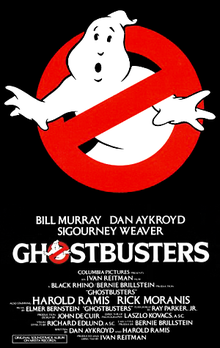
Ghostbusters, released in 1984 starring Harold Ramis, Dan Aykroyd, and Bill Murray is considered one of the best ghost films ever made. This film focuses upon three eccentric parapsychologists who spend their days using their “proton packs” to catch ghosts. In one classic scene from this first film—a sequel was made—these Ghostbusters must clear their minds of fear so they conjure up a form that cannot destroy them. One of them remembers a classic corporate mascot from his childhood, which results in one of the funniest scenes. They nuke a giant “Stay Puff Marshmallow Man.” 

Honorable Mention

Heart and Souls, released in 1993 starring Robert Downey Jr., Charles Grodin, and Alfre Woodard. A businessman, Downey is reunited with four lost souls who were his guardian angels during childhood, all have a purpose, they need to fulfill before they can move on. Downey's character is enlisted to help them.

Wednesday, May 23, 2012

Errol Flynn: Haunted Mulholland Farm


Errol Flynn grew up in Australia-- he did not like school and had a strained relationship with his mother. So Flynn left home at an early age and took odd jobs. Ironically, he had his best luck as a “slave trader” in New Guinea.

Flynn by the age of 25, was in Hollywood. Within months he was cast as the star of the first pirate epic, “Captain Blood.” 

Flynn became a favorite action star and romantic lead as he adroitly made his way through a series of classic swashbuckler films including Sea Hawk, The Adventures of Don Juan, and what is considered his best, The Adventures of Robin Hood.

In 1941 at the age of 33 Flynn built his dream home high above the glitzy Beverly Hills homes that were owned by most famous stars of the time. 

He bought eleven and a half acres on top of a ravine off what was at that time a dusty dirt road named Mulholland Drive. 

He built a two-story colonial-style ranch house. The grounds also included a pool, tennis court, barn, and even a casino. He called his home “Mulholland Farm.” His personal name for his home was "playhouse."

The publicity that surrounded Flynn was rarely about his films. He routinely made headlines for his carousing and mischief, which included fistfights, paternity suits and a story about him and Raoul Walsh snatching the body of John Barrymore. *

Flynn was known about town as a “wicked” ladies-man. His girlfriends made up a list of starlets and stars of the time. 

True to his bad-boy image, Flynn had secret passageways installed with peepholes and two-way mirrors at the farm so he could spy on his lady friends as they ** changed into their bathing suits or used the shower in the bathroom. 

The parties he threw were the scandalous talk of Hollywood. They included “live dance bands, nude divers, fencing exhibitions, and plenty of girls.”

The phrase “in like Flynn” was a crude double entendre used to describe Flynn’s success in getting women into bed. ***

One year after Flynn built Mulholland Farm in 1942, two young girls accused him of statutory rape. His trial lasted a month and made newspaper headlines all over the country. 

The phrase “in like Flynn” which had once flattered, now made him the brunt of many cruel jokes.

Flynn was acquitted of the rape charges, but his credibility as an artist was lost. Finding the damage was irreversible, Flynn at one point even considered suicide. 

Within a short ten years, Flynn fled the U.S. owing half a million in back taxes and alimony to two ex-wives. 

To ease his pain, he started to drink and use drugs. 

He continued to work as an actor in Europe, but he never regained his early success. 

He died in Vancouver B.C. in 1959 of a massive heart attack at the relatively young age of 50.

After Flynn’s death Stuart Hamblen, who was one of America’s first singing cowboys, on the radio, purchased Mulholland Farm. 

Over the twenty years, he owned the farm, several unusual occurrences were reported. 

When singer-songwriter Ricky Nelson, who was a big fan of Flynn, bought the farm in 1980 the activity became even more pronounced. 

Nelson’s daughter Tracy experienced several unexplained events.

Tracy often felt a presence in the house. One night when she arrived home late from work, she spotted a male figure standing in the dining room. Nelson thought it was her father, but his car was not in the driveway. 

Another time she thought burglars had broken into the house. She heard people throwing things at the walls and breaking chairs and glass as she hid in her bedroom. 

Surprised the next morning, she found everything untouched except for one room which had been locked from the inside. When she spoke to her father about what she felt and heard, he replied, “Oh, that’s only Errol.” 

Tracy moved out of the house after this. 

Months later her father called her and described that he and his girlfriend had heard the same smashing of glass and furniture in the same room--they too had thought that someone had broken into the house. When they inspected the area only the door was locked from the inside, nothing else had been touched. 

After her father died in a plane crash, Tracy stated that she felt all the unexplained activity at Mulholland was Flynn’s ghost trying to warn them of an impending disaster.

Tracy's brother Gunnar also had an experience with Flynn's ghost. He saw Flynn's reflection in one of the mirrors in the home. 

Character actor Harv Presnell (he sang the song "Mariah" in Paint Your Wagon) was married to one of Stuart Hamblen's daughters. He and several Hamblen family members encountered Flynn's ghost. 

The Hamblen children and their friends felt the Casino building was haunted and would not enter it. 

The Hamblen's and Nelson's agreed that most of the activity in the house centered around the wing of the house where the den was. In this wing, both the first and second floors were active. This area was where Errol spent most of his time when he lived at the farm.

David Niven and Olivia de Havilland both were close to Flynn when he was alive. Both stated that after his death, they felt his presence near them. 

Niven even mentioned that he and Flynn conversed after Flynn's death. He said that Flynn helped steer his career in the 1960s. Flynn was restless in life, and it appears his spirit remained active after death.

In 1988 Flynn’s notorious farm was torn down after a group of homeless squatters set a fire that burned part of the house down. 

Another home stands in its place and is owned by Justin Timberlake today.

*  Some researchers do not believe that Flynn and Walsh could have actually snatched the body of Barrymore and taken it to Mulholland Farm where they supposedly propped it up in Flynn’s favorite chair, drink in hand. Others state the two were just crazy enough to do it.

** Flynn’s two-way mirrors were an “open secret.” As for his female visitors, most knew about his wicked ways and wanted his attention. But it still leaves one to wonder how many of these women were unknowing victims of this voyeurism.

One biography about Flynn speculates that his behavior was a result of the fact his mother instilled in him at an early age that sex was sinful, and that his genitals were nasty. She was known to beat him. 

At the same time, she flirted with her various boyfriends openly, craving their attention. This sent a confusing mixed message to her young son.

*** Some debate the phrase “in like Flynn” would have been too risqué for the 1940s but it was actually the phrases double meaning that allowed it to become apart of the common vernacular of the time.

I place this video here because it has images of Mulholland Farm--it reflects Flynn's movie persona, not his real-life...