It is believed that a
Romanian Gypsy made this doll by hand for his son, named Letta. This boy often
told his father that the doll, “talked to him.”
Sadly, this boy drowned while
playing with this doll. Afterward, it was believed his spirit then became
trapped in this toy.
In recent years the doll has
been dubbed “Letta Me Out” because of this belief.
People have stated
while they held this doll or even stood close by it caused them to feel
irrational grief. Others report they cried without apparent reason.
This doll has an odd, distorted
face. It is made of wood, with human hair, and glass eyes. The nails in its
shoes date back over 200 years.
Kerry Walton, an Australian,
has owned Letta for forty years. When he first brought the doll home, his
children woke up one night crying hysterically. They told their father the doll
talked to them and moved its head.
There are many
documented cases of people seeing this creepy doll move.
Letta the haunted doll.
Even dogs sense there is
something unusual about Letta. People have had to hold their pets back as they
try to attack and bite this doll.
Walton, who often travels
with the doll around Australia—to display it—claims that every time he
takes “Letta out’’ it rains.
I have shared other stories
about haunted dolls in other posts.
Richmond, Australia’s claim
to fame is its old beautiful stone bridge in the center of town. This bridge is
the oldest of its kind still in use today. It was built between 1823 and 1825.
Located in southern Tasmania,
this bridge traverses the Coal River. It was initially needed to link military
and convict traffic between the colony of Hobart Town and the penal settlement.
In 1837, the Richmond Bridge
needed repairs. Convict labor from the nearby Port Arthur penal colony
was used. These convicts endured unbearable conditions as this work was done.
Their overseer was another
convict by the name of George Grover, who was placed in prison for the crime of
stealing. Grover was known as a “flagellator” for he was tasked with flogging other
convicts.
Grover relished his role as
overseer and abused his power. He gained a reputation as being a cruel
taskmaster. He whipped and beat men he perceived as not working hard enough.
His mistreatment eventually
was avenged. On a March morning in 1837, four convicts found him on the bridge “drunk
on the job.” They set upon him, beat him, and threw him off the bridge.
Later he was found barely
alive on the rocks of the riverbank 30 feet below. He died of internal bleeding.
Richmond Bridge
Ever since his death in 1837,
George Grover’s ghost has been seen. He is one of three ghosts seen on this bridge.
He is observed pacing the length of the bridge as he did in life.
In more dramatic accounts of
this haunting, it is stated witnesses have seen his ghost in the trees west of
the bridge, watching people as they crossed the bridge. At other times people
have said they could sense his anger, he obviously is upset he was murdered.
He is described as a dark
silhouette without discernable facial features that sometimes stalks people as
they cross the bridge.
Another ghost seen on the
Richmond Bridge is a large, black or white spirit dog. This apparition is known
as “Grover’s Dog.” This ghost is seen only after dark.
Lone females and children who
have crossed the bridge at night claim they have seen this dog. Local lore
states this ghost dog is friendly. Several females have said they were
accompanied across the bridge by this dog only to have it disappear once they
reached the other side.
Yet another male ghost seen
on the bridge is another male convict. It is believed this man weary of the
hard labor he was tasked with committed suicide by jumping off the bridge
during Grover’s time.
When the Australia Band, Wildland,filmed a music video for
their title song Wildland, something unnerving
and creepy was discovered, while the video was being edited.
In 1990, the band had spent
the day filming this video in the remote ghost town of Glen Davis, in New South
Wales.
Glen Davis in the Capertee Valley
From 1939 to 1952, the
National Oil Proprietary Limited extracted oil in this area. The facility was
not the safest. Long work hours led to fatigue, and faulty equipment that
was salvaged caused many workmen’s deaths.
The day of the shoot the weather was rainy and
bleak, all the members of the band and camera crew, all
stated that the atmosphere at this location had an otherworldly or eerie feel
to it.
On the day of filming, this ghost town was deserted, except for the band and their film crew. But the group discovered later, while watching what they shot, that a ghostly
figure appears leaning against a concrete pillar.
It is faceless, wears a dark overcoat, and a hat, and at one point on the video, it seems as if
its head is detached from the rest of its body.
After this strange sight was
discovered, the band and crew, meticulously accounted for the whereabouts of
everyone while this scene was shot. After viewing the video--no one could
identify this mysterious figure.
None of them saw this figure during
the shoot.
Still shot with a closeup.
The town’s historian, who
lived there as a child, thinks this ghost may be a miner who was killed. His body
was washed downstream, to the spot where the figure appears in the film.
Another possibility is the figure is the spirit of a priest who committed suicide near the deserted machine shop, where the video was filmed. Could the dark clothes seen on this figure be the dark robes of a priest?
In recent paranormal news the
following story was highlighted.
St. Bart's Cemetery
This past fall on October 31st
4 members of the Sydney South West Paranormal Investigations team caught what
they call an interesting “anomaly” in one photo while on a guided tour. This group
was investigating St. Bartholomew’s Cemetery—the locals call this cemetery St.
Bart’s-- located in Prospect, Australia on Halloween. This cemetery opened in
1841 and was used for burials by early settlers in the area.
A fire damaged the old church connected to
this graveyard in 1989. Witnesses state this church—which is being
restored--and the cemetery are haunted. There have been many sightings of
ghosts in the past.
The lead investigator for the
Sydney team, Kelly Ryan told a local newspaper that the environment was “controlled”
for they were the only ones on the tour that night.
The group points out the figure photographed appeared to be a male with arms and legs and was
moving toward were they stood. The members did hear a whining sound in real
time.
Gravesite in sunlight.
Of the 300 photos the group’s
high spectrum camera took that night the 209thhas what appears to be a ghost in it. Despite
this the group has declined from stating what they captured is “the spirit of a
human.”
The historian and guide,
Hazel Magann, who accompanied the team states the ghost captured in the photo
may be Thomas James Willis, aka the Penrith Jockey.
She mentions she has always
had an aversion to this section of the cemetery—she has experienced “horrendous
feelings” near where the photo was taken.
Photos taken just before this
frame and seconds after do not have the figure in them.
Here is this photo with the
one taken just before it.
Image high spectrum camera caught.
Click to enlarge.
This Sydney team and others
have also spotted a little girl ghost in St. Bart’s near the M4 motorway. The
team saw this little girl last summer as she ran around, they then watched as
she just vanished.
This small ghost is
considered a prankster.
Ryan mentioned her team
always experiences equipment battery drain when they investigate St. Bart’s. Tours of this cemetery are given
twice a month. There are several other ghosts that haunt St. Bartholomew’s including
a former sea captain by the name of Hallen.
Picton is a small historic
town located 50 miles southwest of Sydney in Wollondilly Shire.
This town is considered to be
“crawling with ghosts.”
Picton was established in
1821, when construction on the new Great South Road was complete. With the
arrival of the railroad, Picton became an important stop along this road, which
eventually became Hume Highway.
It wasn’t until the 1980s the
town was bypassed with new construction.
When the locals are asked
about the town’s ghostly inhabitants a variety of stories are offered.
These include: a jukebox at
the Imperial Hotel that plays mysteriously even when it is unplugged, an old
maternity hospital where ghostly babies are heard crying, and an unpleasant
matron known to wrap her hands around people’s throats.
At the local Stone quarry, Viaduct, the sounds of people who drowned in the creek can be heard swimming, and
at the local cemetery the ghosts of a young girl and boy wearing old-fashioned
clothes are heard and seen. Several have claimed to capture these two
apparitions in photos.
These two children are believed to be
Blanche Moon who was crushed to death in an accident in 1886, and David Shaw, the
son of a minister who died in 1946 of Polio.
A family, who claimed there
were no children in St. Marks Cemetery, at the time they visited, took one controversial photo
in January of 2010. It supposedly shows these two ghosts who died 60 years
apart.
Many felt the photo was
faked—photoshopped. It appeared in newspapers throughout Australia.
Hotly debated photo of ghost children.
A shopkeeper who owns Emmett
Cottages, states a woman is seen looking out of one of the windows in the
building and her displays are moved around overnight.
The list goes on—but by far
the most famous ghost story told is about a young woman by the name of Emily
Bollard.
Mushroom Tunnel
Her haunting is connected to
the Picton Tunnel. The railroad built this tunnel in 1867, and during World War
ll it was used to store mustard gas spray tanks. Later it was used as a
mushroom farm. Since this time, the locals call this tunnel “Mushroom Tunnel.”
It was in this tunnel, during
the time it was still in use, that Emily Bollard met her fate. An
oncoming locomotive struck and killed her as she walked through it in the dark.
In one grisly account, it was
said her mangled body was caught in the train’s cowcatcher and was carried all
the way into town.
It is not known if Bollard
committed suicide or if it was an accident, but since her death her ghost has
been seen in this tunnel.
Several witnesses have
reported seeing a white flowing figure that has no face. Sudden drops in
temperature have been observed, and electrical equipment tends to malfunction.
Shadow figures are also
spotted along the Mushroom Tunnel’s walls, and white lights are often seen
hovering over people’s heads. Occasionally 3-dimensional dark figures are seen
walking around.
A modern ghost ship mystery
involves the disappearance of the 3-man crew aboard the Kaz ll. This mystery is
often compared to the mystery that surrounds the ghost ship the Mary Celeste, which I write about here.
On April 20 in 2007 the sea
was a bit choppy in northern Australia near the Great Barrier Reef but this was
not something the 3-man experienced crew aboard the catamaran Kaz ll would have
found challenging.
The owner of this sailing
vessel Derek Batten had 25 years of nautical experience. Two of his neighbors,
brothers—Peter and James Tunstead accompanied him. These two men had been
sailing since their teen years and were savvy when it came to boat navigation
and safety.
When the police boarded the
drifting Kaz ll on the 20th they felt as if they had walked into an
episode of The Twilight Zone. The
vessel was unmanned.
The ship’s engines were
running, there was food on the table and drying dishes at the sink and a laptop
was on.
A videotape camera found
onboard was used just 90 minutes before the crew inexplicitly vanished into
thin air. It shows two of the men just before sunrise on deck, the sea was calm
and the men’s behavior was casual.
When the authorities went
onboard there was no sign of an impending disaster or any signs of violence—the
only thing found amiss was a torn sail--so the police concluded there was no
foul play. So why was the Kaz ll abandoned and where were the crew?
Police boat approaching the adrift
Kaz ll
The answers to these two
questions remain unsolved. At the time some speculated that a freak wave might
have swept the crew overboard or maybe one man fell in by accident and the
other two met the same tragic fate while trying to rescue the first.
Some even speculated that
drug runners or pirates forced the 3-man crew to abandon the ship. Others
stated it was an insurance scam the 3 men cooked up. But all of this is just
speculation and the fates of Batten and the Tunstead brothers remain an intriguing
mystery.
This small island is located
90 miles east of Gladstone on Queensland’s coast. It is one of many islands
along the Great Barrier Reef.
Captain Thomas Stuart who
named it after his ship the Lady Elliot
discovered it in 1816.
There have been so many
shipwrecks around the island that at one time it was dubbed, “Shipwreck
Island.” These wrecks continued to occur even after a lighthouse was built on
the island in 1873.
Early entrepreneurs
discovered the Lady Elliot was covered in phosphate rich guano from seabird
droppings. Miners removed this layer--along with the island’s vegetation
leaving a barren landscape.
Early sailors who visited the
island before the guano mining were afraid to come ashore. This was because at
night wailing and moaning sounds were heard.
An early belief was these
sounds came from the ghosts of long-dead sailors whose ships had wandered too
close to the island’s surrounding reef.
Later when Chinese “coolie”
laborers were forced to live on the island to mine the guano, the true source
for these sounds was discovered.Seabirds--the mutton-bird-- that use the island at night as a rookery
actually make these sounds.
Lighthouse 1902
But the island is haunted. In
1896, Phoebe Phillips, the daughter of the lighthouse keeper, caught pneumonia
and died at the age of 30. Some claim to have seen her ghost.
Her remains share the
island’s small cemetery with Susannah McKee who was the wife of a lighthouse
keeper ten years later.
Susannah who was from Ireland
married Thomas McKee and the couple had four sons. When the McKee family moved
to Lady Elliot Susannah found the living conditions unbearable.
The hot climate and desolate
landscape that had been stripped by the guano mining did not help.
Supplies that had to be
delivered to the island by ship were often late, and meat and other perishables
would not keep.
Susannah found the islands
living quarters small and cramped and medical attention was not available.
After her youngest son went
off to boarding school--Susannah found the isolation overwhelming.
Bored and alone Susannah put
on her best clothes one day in April of 1907 and walked out onto the old
guano-loading jetty below the lighthouse. She then jumped into the sea. She was
59 years old.
Rumors swirled later that her
husband was responsible for her death but there was no proof he murdered her.
When her body washed up on
the shore Thomas buried her next to Phoebe Phillips.
Sadly, it appears Susannah
spirit is trapped in this place she disliked so much in life.
Her ghost was first seen in
the 1930s. The keeper on the island at that time, Arthur Brumpton looked down
from the lighthouse balcony one evening to see a female figure dressed in
turn-of-the-century clothing.
He watched as this ghost
walked between the lighthouse and the 3 cottages behind it.
His young daughter, Margaret
also felt the presence of a stranger. She often heard ghostly footsteps in the
lighthouse.
When Arthur and his daughter
left the island in 1940 the captain on the ship they were on showed them old
photos of people who had once lived on Lady Elliot Island. They both identified
Susannah McKee in one photograph as the woman they had seen.
In 1985 the lighthouse was
automated. The new resort staff that arrived on the island was charged with its
upkeep.
The resort manager, Tili
Birkman immediately reported strange activity on the island that centered
mostly around and in the 3 old cottages.
Jeff Raynor was hired as a
grounds keeper and Chris Lister was hired as a chef. The first day as these two
men moved into one of the cottages they experienced this haunting.
As they sat outside taking a
break an empty plastic ice-cream container came flying out of one of the other cottages’ front door and landed at their feet.
Later as the two described
what they saw, Jeff expressed the fact he did not believe in ghosts.
That night as he slept in the
cottage he was awoken abruptly when he was hurled out of his bed--he landed on
the floor with a hard bump. After this he slept on the cottage verandah
instead.
A few nights later he awoke
again. To his horror he saw a transparent figure of a woman standing in the
cottage doorway.
Susannah’s ghost has been
seen peering out of the cottage windows as well. She is sometimes spotted
walking across the island’s small airstrip.
A team of painters contracted
to paint the old cottages found every time they climbed on their scaffolding it
began to shake violently, but as soon as they got down it stopped.
Today Lady Elliot Island is a
world-renowned scuba diving destination and a Heritage site. The rustic resort
only allows a small number of guests on the island at a time.
Its reefs at high tide are
spectacular. The island is a part of the Marine National Park Zone. Since fishing
is not allowed the variety of sea life seen is incredible. Glass bottomed boat
tours are offered in the area.
Two guests have also
experienced strange activity. One woman camping in a tent awakened to the sound
of zippers opening and shutting. When she got up and looked around no one was
there.
When she climbed back in her
tent she realized the zippers were inside the tent.
Another guest expressed an
opinion he does not believe in ghosts. As he took the last swallow of his drink
and put the glass down gently it shattered. A tour that includes the
island’s cemetery is popular and most visitors are careful to pay their
respects.
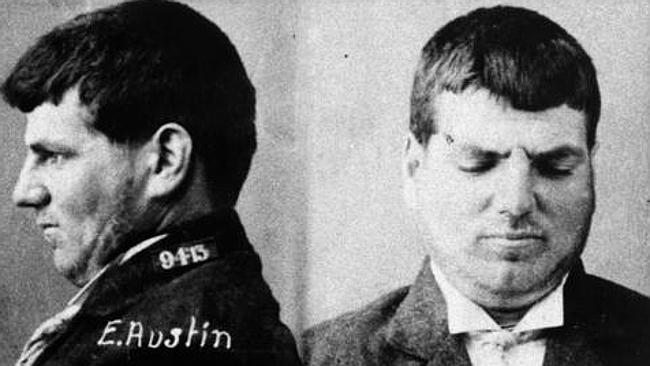
Earnest Austin was the last man * to be executed at Queensland’s Brisbane Boggo Road Gaol, in Australia.
Austin was this jail’s most notorious prisoner. He was hanged in 1913. Many guards and prisoners after his execution reported hearing and seeing his ghost.
Boggo Road Gaol
* Queensland and New South Wales abolished capital punishment for murder in 1922. In 1967, the rest of Australia followed suit.
A Frantic Father
On the night of June 8, 1913, 11-year-old Ivy Alexander Mitchell went missing.
A school picture of Ivy Mitchell
At dusk Ivy’s father, a local farmer became worried when she did not return from a day of playing with friends. He and his son grabbed a lantern and went out to search. They headed for a nearby school.
Near this building, Farmer Mitchell spotted boot tracks alongside smaller barefoot prints --he and his son followed them. At one point the smaller tracks stopped, Mitchell, continued to follow the boot tracks.
A grim sight awaited him. He found Ivy lying in a pool of blood--her throat had been cut -- she had been molested--then murdered.
A Monster
Earnest Austin
Earnest Austin had a long history of run-ins with the police. As a child, he had been sentenced to a reform school. Several years before the murder of Ivy Mitchell he had attacked 12-year-old Louisa Adelaide Champion in 1909.
He had lured her into a washhouse and grabbed her by the throat. He then threatened her with an ax. She managed to scream, which attracted attention. Austin ran off, but within days he was found.
He served 4 years in the Melbourne Gaol for attempted rape. When he was released, he left Victoria and headed for New South Wales and then Queensland where he changed his last name from Johnson to Austin. It was here he found work at Mitchell’s farm.
A colorful bouquet was found near Ivy’s corpse. He had used this bouquet to lure Ivy into the bush. Before the murder, Austin had regularly been seen picking flowers with Ivy.
When Austin was taken to the crime scene after the murder, his boots matched the prints left behind exactly. When a sheet was pulled off Ivy’s battered body, he coldly informed the authorities, “I don’t know her.”
The Brisbane Courier described Austin’s crime as “one of the most horrible and abhorrent in the annals of Australian history.”
Justice Served
At his trial, Austin displayed a “callous indifference,” and he often wore a “silly grin.”
The jury returned a verdict of guilty within 6 hours. The judge sentenced the 23-year-old to “hang by the neck until he was dead.”
Austin put on weight for the noose.
The picture was taken close to his execution.
The day of his execution at Boggo Road Gaol several inmates stated Austin walked to the gallows laughing madly--he did not stop laughing until he was dead. Afterward, some felt his ghost continued to laugh.
Earnest Austin’s last words are disturbing and were not published at the time--instead, two other stories were widely told.
He actually stated, “She loved it”--referring to his victim--“She enjoyed it”--referring to the terrible act, he perpetrated upon her--“and I would do it again if I could.” He then laughed.
Several hardened criminals at Boggo serving long terms, who were not prone to exaggerate, stated Austin's laugh was heard frequently.
The general feeling at the prison was that Austin’s ghost “made a pact with the devil to meet a quota of souls to avoid his own fiery doom in hell.” Old-timers state his spirit tormented the guards and prisoners for years after his death.
The Haunting Several accounts are lost because over the years the guards were encouraged not to talk about it.
Boggo Road Gallows
What is known is both the prisoners and guards did report hearing Austin’s evil laugh in the early morning hours throughout the cellblocks.
Another frequent sound heard was a shrill shriek emanating from the gallows in E Wing.
A consistent witness report involves people seeing the shape of a dark figure in this wing. This figure is believed to be Austin’s ghost.
After 119 years in use, Boggo Road Gaol was closed down in 1989. This did not stop the haunting.
Most of the buildings at Boggo were torn down except Division 2. The old jail is now a museum and today tours are given.
Visitors still report seeing “a silhouette of a man on the upper floors and beneath the stairs at E Wing.”